Charles Barabé / Ratkiller – split 10.9.17 by Mike Haley
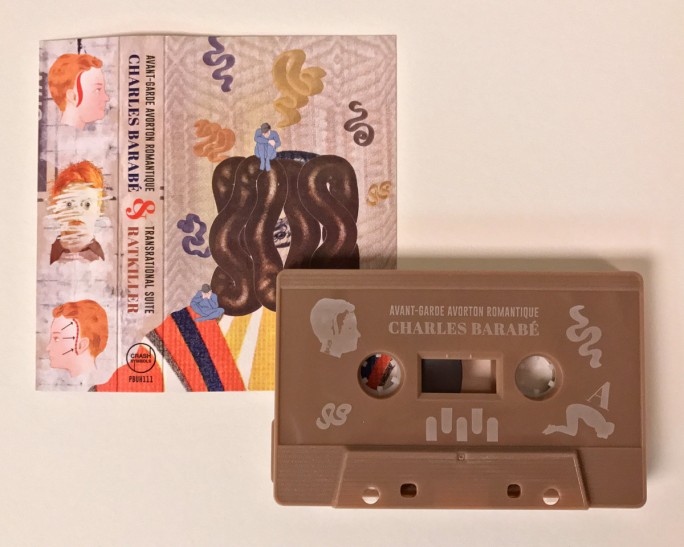
Alright, alright… If I’m gonna be 101% honest with the four or five people that read my cassette reviews (hi, mom!) then I should start off this cassette review by stating that I 101% knew I would be reviewing this cassette the moment I laid my baby hazels on it. For the lazy-player’s run down on why, here are some quick bullet points…
* Charles Barabé is a sound-genius.
* Ratkiller is a consistent maniac.
* Crash Symbols deliver the goods like one of those late-night munchies services that zoom Doritos and blunts to your door at 2:17 am.
Sooooo, the only way this pup was going to let me down would be if was accidentally dubbed over with dreamy bedroom pop or something. But even then, the artwork, with it’s Maurice Sendak having a bad week vibes, would get me by for days. Sooooo.
Luckily, the original audio was indeed left intact.
Barabé snaps into his side, “Avant-Garde Avorton Romantique,” like a rat trap, ironically. Channeling the brooding proclivity of dense soundtrack narratives, Chuck reassigns hunks of classical music and it’s kin into beyond epic sagas. As the timpani crashes with anger, reverberating around fever inducing cleaves of sound, you can almost smell gladiators prepping to do something raw and regrettable. The structure of it all is colossal, but also tangled by wormy synth sputters. A maze for your emotions to navigate. Over the last few years, with releases on labels such as Orange Milk, Tranquility Tapes, A Giant Fern, and many many more, Barabé has become less of a musician and more of a story teller. His techniques are basically copywrote. Stiff text-to-speech lines often reoccur to advance the plot. Perfected on his 2014 recording “Insultes (hommage à John Cage),” they are quickly heard here like HAL 9000 browsing a dating site while on the toilet. A syrupy “Communication is a huge thing for me. After a long day at work I just want to cuddle and watch TV and fall asleep” drains over a lethargic electronic rhythm. Everything stinks of confusion and suspicion and an uneasy joy. These elements under the steady hand of Barabé make it simple to close your eyes and drift into a previously non existent world.
I don’t remember where I initially heard Mihkel Kleis’ project Ratkiller. Maybe it was the “Cellar Dweller” tape on Rotifer? The point is I kept hearing Ratkiller because I knew it was the right thing to do. My instincts were confirmed by “Transrational Suite,” the name given to the five tracks on the flip side here. Kleis occupies the same real estate as Barabé – that is one where a whimsical jigsawing of romantic melodies takes place – but goes with a contrasting layout. On side A, where brick is exposed, Ratkiller hangs flowing tapestries. Where “Avant-Garde Avorton Romantique” glows high-watt neon bulbs, “Transrational Suite” relies on natural light to show off it’s slow-curved angles. But even with those soft color palettes and deep shag sounds, Ratkiller keeps peculiarity in mind. The track “An Attempted Dialogue Between Man and Fish” is a perfect example, where the normalcy and niceties of a guitar serenade are slowly leached by gurgling cloudiness.
Go grab a copy or two from Crash Symbols. And I’ll see you at Thanksgiving, mom!
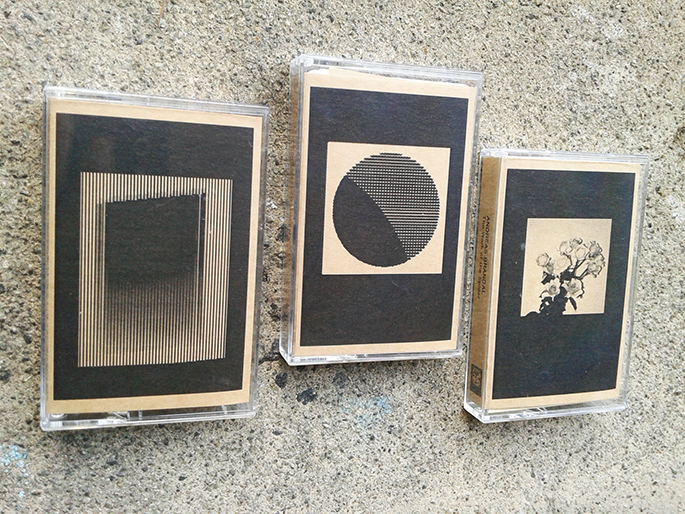
If ya blinked any time during the month of September then chances are you missed out on the grand opening of Muzan Editions. The label started it’s life with three tapes, each in bite-sized editions of 25 copies, all of which were quickly claimed (AKA: SOLD OUT!). Of course binary streams are still available by way of Bandcamp, but you’re gonna wanna go the extra mile and track these down in physical form, if at all possible. A first hand witnessing of the care that went into presentation is a must. Heady artwork is darkly bruised onto uncoated kraft stock, the sort of paper that 100 year old invoices for haircuts were hand written on. The Jcard panels and shell stickers are atypical, adding to the fine start from this Japanese-based imprint. And the sounds. Oh, brother… The sounds!
MEDS001 is Florian von Ameln‘s “Interbellum.” The time between wars is referred to as an interbellum, a period of contemplation that humanity seems less and less eager to grant itself. America has been at war literally every day since I was born in 1980, so an interbellum seems more like an abstract concept to me than an actual allotment of time. Being a total stranger, I can only guess how Florian von Ameln processes the idea of interbellum. I know they live in Germany, which has it’s… past… and I have “Interbellum” as a compass, with it’s needle pointing strongly to peaceful grounds. The C20 consists of five tracks titled 1919 – 1923, the five years following the first World War, which arranges the listeners thoughts, giving a broader meaning to the guitar ripples snatching themselves back in a surrounding of field recordings and eerie number station samplings.
Back in the 40’s Peter N. Witt, a Swiss pharmacologist, researched the effect of drugs on spiders. He dosed the arachnids with Benzedrine, marijuana, mescaline, and such (or fed them flies that had been partying) then basically checked out how cool their webs were. For “The Work Of The Spider” Andreas Brandal laid off the animal testing and garnered inspiration from Hungarian film director Béla Tarr with equally provocative results. Maybe he tossed back some bennies too? I don’t know, I’m not a cop. Brandal’s synth webs glisten in the sun with snap and precision. Each track is silky as can be while churning along with force and focus. Maybe he is a spider? Someone get Norway on the phone!
Hegira Moya‘s “閑静な住宅街” (translated to Quiet Residential Area) plays quieter than most residential areas. Even the REALLY quiet ones. The state these sounds are in are more akin to abandoned areas, left vacant after some sort of chemical spill. Synthesized whispers crack like thawing ooze as animals move in to see what that new smell is. Squirrels and various rodents nibble at the bubbles, riffle through remnants, totally unaware that they’ll have a second tail in the morning. The tones are pinks and greens and yellows, vibrant yet tiny, like a Lite-Brite jacked into a practice amp.
Jeez, I really managed to drudge up some of the most bummer tones from these tapes. They are amazing, I swear, and will somehow still make you feel good inside. As I said earlier, they are sold out from the source, but happy hunting! In the meantime, consume the digital goodies and stay focused on Muzan for more super depressing/uplifting releases.
Takahiro Mukai / Shoeb Ahmad – split 8.30.17 by Mike Haley
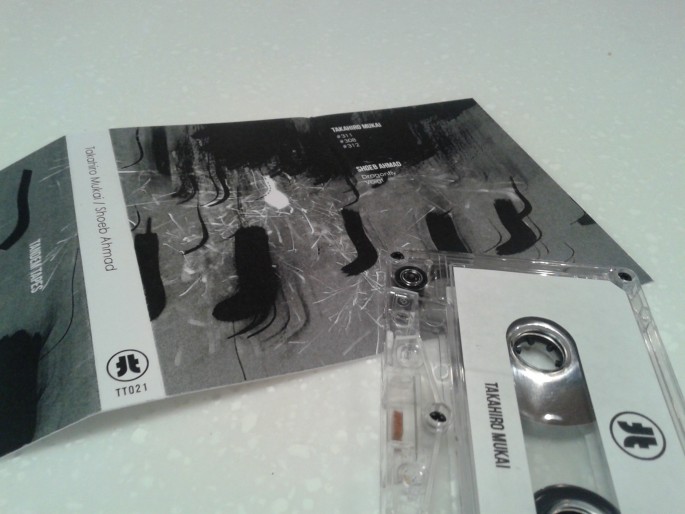
Allow me to channel my inner Suess for a moment to describe Tandem Tapes… If you couldn’t tell by their name, or the long list of releases that are exclusively splits, Tandem Tapes is a tape label that exclusively releases splits. That was fun. I promise not to do it again. Anyways, one of the latest splits out of Tandem’s Jakarta HQ pairs up Takahiro Mukai and Shoeb Ahmad in a long distance three-legged race, an ocean separating them (literally and metaphorically).
Takahiro Mukai‘s wormy synths recently discovered a fresh corpse in their garden, at least that is what I’m attributing their avid delight too. Barely shaded from a glistening sun, they chug-a-lug below a thin layer of soil, fluxing in shade. Bobbing their heads – or maybe tails? It’s hard to tell with worms. Do they even have “heads” or “tails??” I’d say no… I fear this is getting sidetracked – as I was saying, bobbing their whatevers, these slimy lil’ suckers pass by shady looking bugs and broken glass on their path to the body. This particular side of the cassette has three tracks, titled #311, #308, and #312, in that order. Through the entirety of those three tracks is a consistent vibe that is orderly and pleased; These synth worms are thrilled to be alive! They bubble with excitement, never letting it overflow into chaos. Single file lines have been formed and order/fun is being kept. This isn’t some going-out-of-business Best Buy in Florida. This is Takahiro Mukai. He knows how to control his worms, he feeds em right. That’s why they do it. That is where these hypnotic mandalas of blips and blaps come from.
Oh yeah, I Googled “worm anatomy.” Turns out they have gizzards.
From Osaka, Japan to Canberra, Australia. We can jump in a plane or a boat can sail, ya! Sorry, I promised to stop that. Shoeb Ahmad‘s side offers far less optimism than Takahiro Mukai’s saucy worms with their three-day weekend dances. Worms are immediately replaced by “Dragonfly,” an epic jaunt compacted into six minutes in which the elegiac vibrations of an acoustic guitar are drug across unfinished hard wood. A somber trek made awkward (in a good way) by a pesky, twitching loop, all staticy and in desperate need of a Swiffer Dust Cloth. There is an uneasiness deep in the sounds here. I’d imagine this track is how one would feel walking into the wrong funeral. The weird discomfort you’d feel upon not recognizing a single face in the room, including the corpse. Maybe it’s the same corpse that ended up in Mukai’s worm garden? At 11 minutes “Voigt” is a reflection on what just occurred. Here, the more bummer elements are blanketed by heated tones and desultory snaps, like a medicated recess from reality. It’s nice to get away, even for a moment.
Only 25 copies of this split were made, because Tandem does very small edition sizes. So with a fizzle, a nizzle, a dizzle flamp plamp. Please direct your web browser to a Band that is camp.
Wires Crossed – Sound Holes vs Self-help 8.21.17 by Mike Haley
There is a legion of labels and weirdo jammers releasing cassette, with new names popping up every single day. With those staggering numbers it can be easy to mix em up, get confused, or form loose associations. Wires Crossed will take those Corey Haim/Corey Feldman and Oprah/Uma situations and figure out just how similar they are.
This time around we take a look at Sound Holes and Self-help, two labels that share initials and a taste for black & white Jcards.
-In 5 words or less describe your label.
Sound Holes: Sound Holes is a “noise/experimental sound cassette label.”
Self-help: Experimental sounds
-Where in the world does your label operate out of? How much distance do you think separates the two of you?
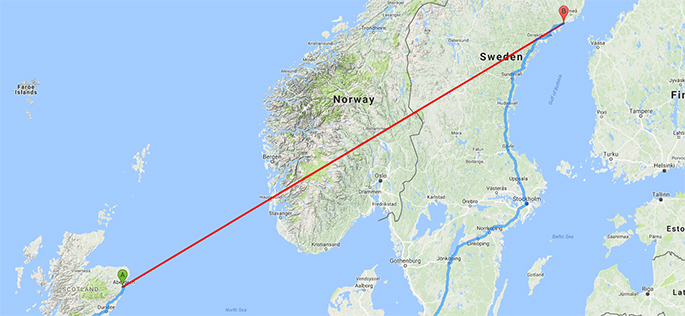
Sound Holes: Aberdeen, Scotland. I think Self-Help are in Sweden somewhere, I’ll guess 1100 miles as the seagull flies
Self-help: Northern parts of Sweden, if I would guess 6-7000 km or something like that? I really have no idea from where Sound Holes operates so this is a wild guess.
actual distance: 871.83 miles , 1403.07 kilometers (km) , 4603252 feet , 1403071 meters
-What was the last thing you ate?
Sound Holes: Steak sandwich.
Self-help: A tempeh burger.
-All of your covers are black & white. What is behind that choice?
Sound Holes: I like to keep it simple, also always thought that black and white photocopied artwork/zines etc looked the best. The earlier releases always had colourful cassettes with colour spray on them, I enjoyed doing that but there was too much spray paint. I then started labeling the tapes and stopped using colours. Might go back to colours though…
Self-help: I use a stamp with removable types, the reason is the directness and simplicity. I like the contrast of black on white, the uneven spacing that sometimes occurs and that the placement of the actual print varies somewhat.
-Self-Help has released a tape by Pink Gaze and The Heroic Quartet. Sound Holes released a tape by Golden Oaks Three Billion. If you were forced to add one color to your black & white color scheme, which would it be: Pink or Gold?
Sound Holes: Gold. A touch of class.
Self-help: Pink for sure. That’s just an awesome color in combination with black and white.
-What color(s) are the walls of the room you are currently in?
Sound Holes: Off-white & copper(ish).
Self-help: Yellow, green, red and white. Wallpaper with large flower prints.
-Wayne or Garth?
Sound Holes: Garth. Game on!
Self-help: Garth.
-What are a few of your favorite tape labels at the moment?
Sound Holes: Heavy Tapes (always), Skeleton Dust, Chocolate Monk, Three Songs Of Lenin, Beartown, Throne Heap, Mantile, Palilalia, Hanson (not all of these are exclusively tapes, but that doesn’t matter). There are so many that I have not listed.
Self-help: I love Falt. Amazing artwork and the tapes are all just wonderful.
-Considering that both of your labels’ art is strictly black & white, and further Self-Help always sports text-only Ocards, has anyone ever decided against doing a tape with you because of art restrictions?
Sound Holes: Not that I know of. I hope not!
Self-help: Not that I know of. Most people contacting me about releases that I consider know the label and like the aesthetics it has, no one has decided against due to the visual restrictions after contacting the label.
-Do you have any cassette pet peeves?
Sound Holes: No, I like all cassettes equally.
Self-help: The nostalgia for sure. Cassettes are a great recording media in itself, no need to soak it up in nostalgia.
-Are your releases home or pro dubbed? Why?
Sound Holes: Home dubbed (on decent quality cassette decks), I like the process (although it can get a bit much sometimes). Also, I don’t have room to stack up the full runs of all the in print releases if I got them all pro dubbed.
Self-help: Home dubbed. I like the approach of doing it at home, stamping covers, dubbing and drinking a few glasses of wine. Also, I like how the releases grows on you, sitting there dubbing and listening to the releases over and over and really getting to know the music.
-What prompted you to start a tape label?
Sound Holes: A good friend, many years ago encouraged me to start up.
Self-help: I had a few things I thought needed to be put on tape. Stuff I stumbled upon on soundcloud back when you actually could stumble upon things there, now it feels more like a mess or it might be me having too little time to actually delve through to the stuff I love.
-Both of your labels have very similar logos. What typeface did you use?
Sound Holes: One of those stamp letter sets. Used it at the start and will never stop.
Self-help: Oh no idea. Just used the types I use for the covers, took a picture and that was that. Logos isn’t really a thing I care about.
-What sort of edition sizes do you do?
Sound Holes: 30 – 100ish.
Self-help: It has varied, but nowadays I only do runs of 30.
-Would you consider Sound Hole releases to be “self-help” / Self-Help releases to be “sound holes” in anyway?
Sound Holes: Yes, sounds soothe the soul.
Self-help: Sure, if I interpret it as sound holes in acoustic stringed instruments, directing and resonating the sounds in a way. I think this is the main reason for doing a release on whatever phycial media, directing and collecting these interconnected but separate works together and giving them a context in which they can resonate together with one another.
-If you were to start another label with the initials “S.H.” what would it be called?
Sound Holes: Spicy Hammock. I’ve always wanted to call a label Each Hit. Has that name been used before? Caroliner has/had BullShit.
Self-help: Sun Hearth
-What video game character would you most like to release a tape by?
Sound Holes: I bet Mario has seen some things in his lifetime. He could probably channel that into something pretty special. Sonic would probably have more projects/aliases though, he seems a bit more all over the place.
Self-help: Harry from Firewatch. I imagine field recordings of the wildlife and maybe snippets of the conversations over the radio with Delilah.
-If your label was a chemical element, which would it be?
Sound Holes: It would be an inorganic anion, Bisulfide, SH−
Self-help: Iron. Oxidized of course.
-What was the last tape you bought?
Sound Holes: Last one that arrived was Alex Crispin “Idle Worship”. Last I ordered were a few tapes by the guitarist Alexander.
Self-help: Jääkausi by this amazing band Horceface. Highly recommended.
-Paper, rock, scissor. Shoot!
Sound Holes: Rock.
Self-help: Paper.
-Let’s end this with a random Youtube video. What ya go?
Nakatani/Nanna/Schoofs/Woods – s/t 8.11.17 by Mike Haley
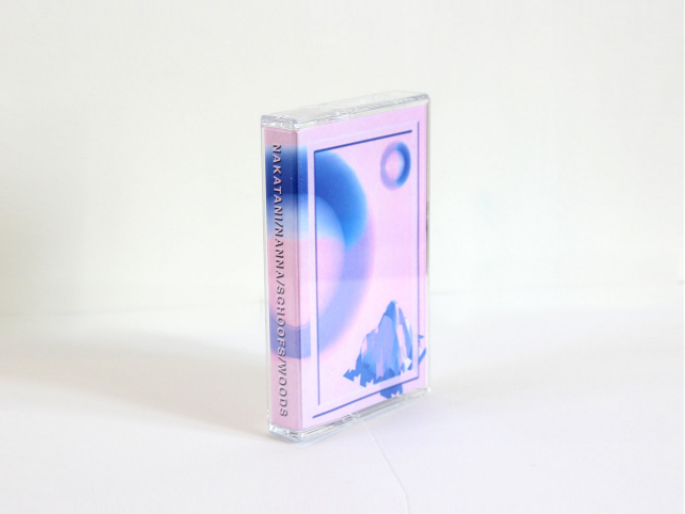
The ad-lib ensemble of Tatsuya Nakatani, Peter Woods, Jason Nanna, and Amanda Schoofs approach free music on their self-titled cassette as if they were just pulled over by a small town cop while on mushrooms. Eyes wide, toes clenched into anxious feet-fists, Woods barely moves a muscle, showing restraint rarely seen on his FTAM label. Fearing that he and his bass will both end up in some podunk cell, munching on bologna and wet white bread sandwiches for weeks, he wisely stays away from playing any bass face inducing tunes. The occasional pluck/scratch/bump of his instrument could best be chalked up to nerves. Who can blame him? The bass player always gets the short end of the stick in these situations. Meanwhile, Shoofs is too far gone into her zone to be bothered with maintaining even a facade of normalcy. From shotgun her pupils gawk through the window at the knock off Rosco P. Coltrane on the other side – not just the other side of the window, but the other side of a reality – as she spits out poetry in dead languages, at times operatic, but always concerning and with a beautiful range. There is a strong possibility that Tatsuya Nakatani, the Japanese based percussionist with a seemingly endless catalog of sound, was originally in the now vacant driver seat of the car, but pursued solace in the trunk, shuffling an oil pan, tire iron, and loose lug nuts to make space. Rosco can hear the metal-on-metal scuffle plain as day, but there are more pressing issues at hand. For instance, Mr. Nanna. Like a toddler Nanna can’t keep his hands to himself, fiddling with the fuse box, stereo dials, and any knob, switch, or slider he can get his sugary hands on. His electronics, along with those provided by Amanda, fizzle, gelling together the unfettered ambient malaise as he thinks to himself “You’re doing great. Just keep fucking with these turn signals. You’re not about to melt. This cop doesn’t think you are going to melt.” None of that is the case though. Nanna is melting, cooking the dashboard into a goo with him. Good news: they kill the cop with brainwaves and continue their 9 mph commute down whatever random road they are on.
In reality the quartet’s drive was a spontaneous jam session in Milwaukee. Culled from that unscripted meeting are 16 bite-sized chunks of abstract, free jazzish beauty averaging about two minutes a shot. And it was all CAUGHT ON TAPE and released in an edition of 75 by the always impressive Full Spectrum. You can find one here.