Cassette ABC’s
10.18.13 by Mike Haley
There’s a lot to love about cassettes tapes. Here we’ll take a look at 26 related particulars of our good buddy, from it’s parts to it’s past. Hell, some of this shit might even be factually correct! We don’t have a fact checker at Tabs Out, so who knows? I think we at least got the order of the letters correct. Let’s get going and find out.
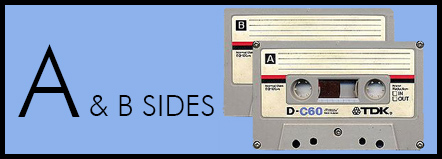
Any self respecting musical format has at least two sides and we’ve decided, as humans, to refer to them as the “A-Side” and “B-Side” respectively. Occasionally you’ll come across some fool who insists on calling them “Side 1” and “Side 2”, but they are wrong as shit and probably hate themselves. The origin of the A / B sides goes back to 45rpm singles when producers would throw “the hit” on the A side and a lesser, live, or instrumental cut on the B side. That same style was used with cassingles, but those aren’t coming back, no matter how much effort is made. So really, as far as (particularly noise) cassettes go, differentiating side A from side B doesn’t matter all that much. With some exceptions of course, like splits for example, but there’s usually some signifier to guide you along your journey. As a fail safe, the side with the screws is the A side.

Blank tapes are the backbone of DIY cassette labels and maybe the femur or a rib of DIY / underground music in general. Whatever the 3rd or 4th most important bone in the body is, that’s the blank cassette. Before the advent of the writable CD, this was the only option for band’s to make demos, friends to make mixes, and for people to trade music and sounds with each other across the globe. Ironically, they are also the culprit that killed music in the 1980’s (RIP). A few manufactures still produce packs of blanks in stock lengths, mostly 60, 90, and 120 minutes, but if you’re going to dub a release going bulk is your best bet. You can get pretty much any length you prefer up to 120 minutes, which is an hour per side. Fun Fact: A C90 contains 443 feet of blank tape.
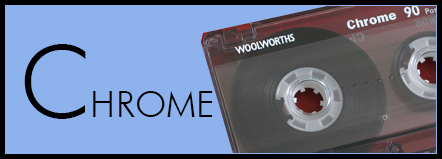
Tapes come in different grades. One of those grades, on the higher end of the quality spectrum, is chrome. Cassette tape is made of a plastic film with a magnetic coating, in this case chromium dioxide (CrO2). The crystals from chromium dioxide are dispersed more evenly and compacted on the tape compared normal tapes where ferric oxides is used. The results are lower noise and a higher frequency output. It’s all very sciencey, and let’s be real, you never cleaned the heads on your deck or wore earplugs to a single No Fun Fest. So does it really matter? I mean, does it REALLY matter? Maybe it does. Maybe the emperor is actually wearing a “deep V” T-shirt. You tell me.

Ray Milton Dolby passed away on September 12th (not that September 12th), but 45 years before that he invented the noise reduction process known as Dolby NR. Developed through his company Dolby Laboratories, Dolby NR helped make cassette tapes a high fidelity format, focusing on reducing tape hiss. You know that button your deck that you hit and some of the hiss vanishes? You can thank Ray for that. Also, his wife’s name was Dagmar. That’s sort of insane, too. Right? Here is a video of Ray explaining his noise reduction process.
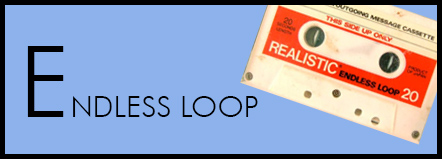
Endless loop tapes were made for practical times when a short message or jingle needed to be played. It was an age when technology was comfy-cozy and we didn’t involve lasers and WiFi in all of our shit. You could find them in a bunch of lengths, but they were mainly short, like 20 or 30 seconds long. Just long enough for your dad to make the funniest fucking answering machine message in existence. Dad, are you RAPPING about not being home!? Oh shiiiiiit. They survive today in the noise scene as releases and non-instruments. And if ya want, you can make your own.

Ferric Oxide (Fe2O3) is the most common magnetic particle used on cassette tape. Like the chromium dioxide mentioned above, it’s mixed with a binder, coated onto the tape, and magnetized during the recording process. When you play a tape the magnetized Ferric Oxide runs over the tape head and produces an electric signal. If you coated a CD with Ferric Oxide it would just become even more useless.

Sure, Germany has an… iffy past. But it turns out ze Germans are waist fucking deep in cassette tape history. Take my hand as we travel through time. 1928: German-Austrian engineer Fritz Pfleumer invents magnetic tape. 1935: German company AEG releases the first reel-to-reel recorder dubbed the Magnetophon. 1963: Philips unveils the compact cassette at the Berlin Radio Show. 1974: Kraftwerk “Autobahn” is released. Other stuff went down in Germany, but lets focus on the positive.

Unless you’ve been living underneath a CD burner I’m sure you’ve dubbed a cassette before. You put a tape with material on it in one side of your deck, a blank or something you wanna copy over in the other side. Hit play on the master, play/record on the recipient, and let it ride. You’re copying that puppy in real time. BUT THERE’ S GOT TO BE A BETTER WAY!! Or at least a quicker one. That’s where high speed dubbing/duplication comes in. Most decks have a high speed dub button that speeds up the process about 2x. You can also kick shit up a notch with a high speed duplicator like those made by Telex and others. These machines will take the material from one tape and copy it onto 1, 3, or even 20 other tapes all at once, with options like doing both sides simultaneously and auto-rewind, at even a faster pace compared to dubbing. Most of em have the ability to link up in a series giving you the option to copy pretty much an infinite amount of cassettes at once. The downside: Your gain in time means a sacrifice in quality. Here is a video of a dude who calls his 1-4 duplicator “the beast”. It’s creepy.
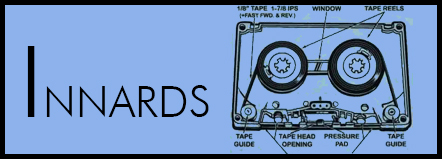
One fascinating aspects of cassettes for me is the fact that they are themselves little machines. The idea of a stylus vibrating over a record’s groove and creating sound waves is intense, but all the moving and fixed components of a cassette tape is a riveting zone. Press play and watch that shit happen. Pressure pads providing even contact between tape heads and tape, reels spinning at their specific speeds. It’s like when Pee Wee made breakfast before his big adventure.

The most common insert for a cassette tape is the Jcard. It’s name comes from the fact that, when folded, it resembles the letter “J”. Obvious enough, but when I first heard that it blew my mind into bits. I guess I just always thought it was named after renowned insert designer Jerry Cardington. Oh well. The basic Jcard consists of three sections; the large front panel which is the cover, the spine, and the back flap. Extra panels are regularly added, which is why you’ll sometimes read “two panel Jcard”, “three panel Jcard”, etc… Quick grudge: I got’s me a pet peeve and that’s when text on the spine is upside down. When you’re looking at the cover of the tape the type on the spine should be right side up. Just like a book, man. Get it right!!!

Everyone knows the Ayatollah Khomeini for issuing a fatwa on Salman Rushdie and for his role in the 1979 Iranian Revolution, but it’s a little known fact that he invented the fast forward button on cassette decks. No, that’s not true at all. He did, however, famously use cassette tapes and underground swapping to distribute his sermons on overthrowing The Shah. I think the B side was his modular synth project. It was one of the most well known political uses of cassette tapes, and from what I understand, everything went swimmingly and has been awesome since. Moving on…

When a tape comes to the end of a side, or when one is rewound to it’s beginning, the spools come to a halt. In order to keep the fragile magnetic tape from snapping away from the spools and turning cassettes into single-listen jams, a stronger piece of plastic is used as a middle man. That piece of plastic is called a leader. You can’t record any sound onto the leader of a tape, which last about 3 seconds or so at the beginning of each side. Some tapes start instantly and are called leaderless tapes. The only known anarchist format for music.

I can’t speak to shipping in other countries, but in the United States the name of the cassette shipping game is Media Mail. Media Mail (formerly known as Book Rate) is a relatively inexpensive way to ship books and recorded media throughout the country. Talk all the shit you want on the Post Office, but that crew will sling four or five cassette tapes 3,000 miles across the country for about $5. And it will only take a week. It’s cheaper to send a single tape by First Class Mail, but when you got a grip, go with Media Mail (subject to inspection).

In 1964 when the Philips company introduced the compact cassette in the United States they did so under their Norelco brand. People refereed to them as Norelco cassettes and the plastic cases they were stored in as Norelco cases. I guess the name just stuck. You’d think by now we would have nailed the mold but there is exactly an unfuckingbelievable number of Norelco variations. Some have lil’ spool nubs, some don’t. There’s an array of ridges and dimples. Rounded corners and sharp edges. Different sized back flaps. These things are like snowflakes. You’ll usually see cases where both parts are clear, or clear with a black back, but they come in a fairly large assortment of colors and tints.

The baby cousin to the Jcard is the Ocard. Ocards are printed, wrap-around covers that cassettes slide into. Like a little beer koozie for tapes, but made out of a heavy weight paper. They’re kind of a bummer because A) they don’t stack well and B) they don’t have the protection a Norelco provides a Jcard, so if they get wet, they are done for. You’re probably thinking “why would they get wet?” That’s my business. You take care of your own and leave me be.
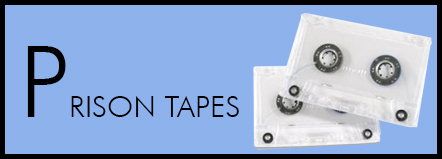
Prison tapes are made with unique specifications so they can be used by people in prison. That means shells that are totally clear and contain no screws. I guess so you can’t hide anything inside of them or use the screws as some sort of shiv. Or is it a shank? Either way, I feel like one could still fashion a handy weapon out of the shell itself. I know I could. Shit, I would do great on the inside. Companies, like Music 4 Inmates, make customized tapes for those in prison.
Got a free minute? Well, you made it to Q, so yes. Yes, you do. You have tons of time to burn. So why not use a minute of that time to take this quiz and see if you can match a manufacturer with their blank tape. I did pretty bad.

Reel-to-reel is the Grandpapa of magnetic tape. It was there from the get-go. It’s actually so old that at first it didn’t even have a name. It existed for about 25 years before someone was like “yo, let’s call it reel-to-reel” so they could distinguish it from the new fangled tape that came in cartridges and cassettes. Reel-to-reel has enjoyed some pretty tight uses as a musical instrument and should be proud of itself.

All of the parts and tape that make up a cassette are housed inside hard plastic called a shell. Most tapes I bought growing up had shells that were either black, white, or clear with a black foil liner. For whatever reason that is all record labels ever used, and I’m not sure why, because you can get pretty much any color shell your little heart desires. You can grab em in opaque colors, transparent colors, transparent colors with foil liners, completely clear. It’s a virtual United Nations of choices. People sometimes try to swap out shells, like this cheeky bloke did with his copy of Queen “Night At The Opera”.

Obviously we gotta talk tabs. It would be irresponsible if we didn’t go over our namesake. Plus, the details of tabs on cassette tapes are actually more interesting than you’d think (editors note: When you read that last sentence, use a classic nerd from Saved By The Bell voice and act like you’re pushing up a pair glasses). If you look on the top of a tape you’ll see little tabs of plastic on either end that can be popped out. Their basic function is write protection. When the tabs are popped out the cassette is now considered *takes of sunglasses* Tabs Out. A part inside of your deck called a sensing lever will dip into the notch that is now there, preventing it from being recorded over. If the tabs are left intact you can dub over it as much as ya’d like. You can life hack the shit out of this by covering up the popped notch with Scotch tape or sticking a crumbled up ball of paper inside of them. Some high speed duplicators don’t have sensing levers and will record over whatever you throw in em. The most awesome thing, in my opinion at least, is that number and placement of tabs and notches on a cassette shell will tell a deck what type of tape it is. That’s pretty tight.

New decks are still being manufactured and even have fancy pants USB outputs. But at virtually every garage sale, flea market, and thrift store in the world is a cache of cassette decks waiting for a good home. Someone should make a commercial with a montage of decks and Sarah McLaughlin’s “In The Arms Of an Angel” playing over top. Prices are gonna vary depending on where you are, but it’s not insane to grip a decent deck for $5 – $10. And remember, there is gold in them there hills. Maybe you’ll grab a baller deck from the likes of Nakamichi or Bang & Olufsen. Keep diggin’.
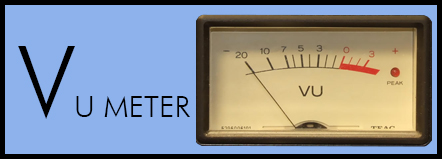
Some classic decks will have a VU Meter, or Volume Unit Meter, that displays the audio signal level in decibels with a little jumping needle. Most of them today are digital displays and drastically less cool looking. Now, this is just off the top of my head, but the reading of the volume indicator shall be 0 VU when it is connected to an AC voltage equal to 1.228 Volts RMS across a 600 ohm resistance (equal to +4 [dBm]) at 1000 cycles per second. I mean, duh.
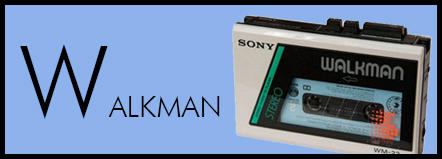
The Walkman is a portable cassette player made by Sony, the first model being the blue and silver TPS-L2 in 1979. The TPS-L2 had two headphone jacks, so a happy couple could portabley jam a tape together over headphones, and a “hotline” button that activated a built-in microphone. When pressed, one listener could talk, overriding the music, and the other listener would hear them. As opposed to just tapping them on the shoulder I guess? That feature was gone by Walkman II. Competitors popped up from the likes of Toshiba (the Walky), Aiwa (the CassetteBoy) and Panasonic (the MiJockey), but Sony crushed em all with advances and updates made to the Walkman with each model. Three years ago Sony announced that they would cease production in Japan but would continue, for a short time, in China. So grab one while ya can. There are many many many Walkman commercials, but this one is pretty next level.
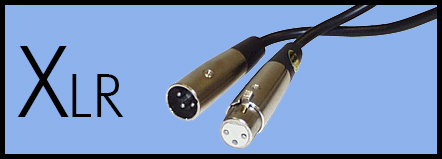
XLR is a style of connector mainly used on professional video and audio equipment and very rarely found on cassette decks, but Jesus, you find another cassette-related word that begins with X! Go ahead, I’ll wait… Nothing? Okay then. You’re mainly gonna see RCA and 1/4″ audio cables to send a signal in and out of a cassette deck, but I think some high-end Nakamichi shit uses XLR. I’m not 100% sure…. Whatever, fuck you. XLR was invented by James H. Cannon and I bet he’s dead.

It’s like the old saying goes: If ya got tapes, ya gotta put em somewhere. I can still hear my Grandmother singing it to me. You can store your collection any way you like, until Obama has his way, but there are a few pillars that are tried and true. The cassette drawer (like the one in the pic above) is a classic. They are normally wood, or at least some composite with a fake wood laminate, and have three drawers. Each drawer usually holds about 10 tapes or so, and you can stack these puppies from the floor to the ceiling. If you wanna go the display route you can pick up some of those Napa Valley organizers that are oddly expensive. But you can hang those on your wall and keep cassettes at the ready. Or you can throw everything in a shoebox or old potato sack. I’m not your dad.
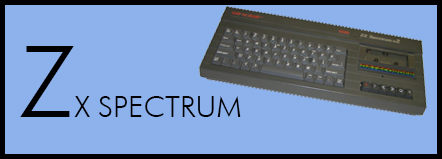
Ah, the ZX Spectrum. If you wanna listen to a dude discover, and lose his shit over, the ZX Specturm then check out episode #21 of Tabs Out. The ZX Spectrum was an 8-bit home computer, video game system released in 1982 by Sinclair Research Ltd. The games for it were on cassette tapes. Just your average audio cassette tape. They were loaded by playing them on a cassette recorder connected to the Spectrum. You can also just play them on a deck and listen to them, which we did on episode #22. Tons of third party programers produced games. Games with absolutely absurd names and themes like Ninja Hamster, Incredible Shrinking Fireman, Ninja Grannies, Bangers & Mash, Ninja Scooter Simulator, Headbangers Heaven, and THOUSANDS more. like 24,000 more! Every aspect of this thing is insane and something you need to experience for yourself. Luckily the site World Of Spectrum exists to archive the games, offer emulators, and has tons of information.