Tee Vee Repairmann – What’s On TV
3.14.23 by Zach Mitchell

Tee Vee Repairmann – What’s On TV
3.14.23 by Zach Mitchell
3.14.23 by Zach Mitchell
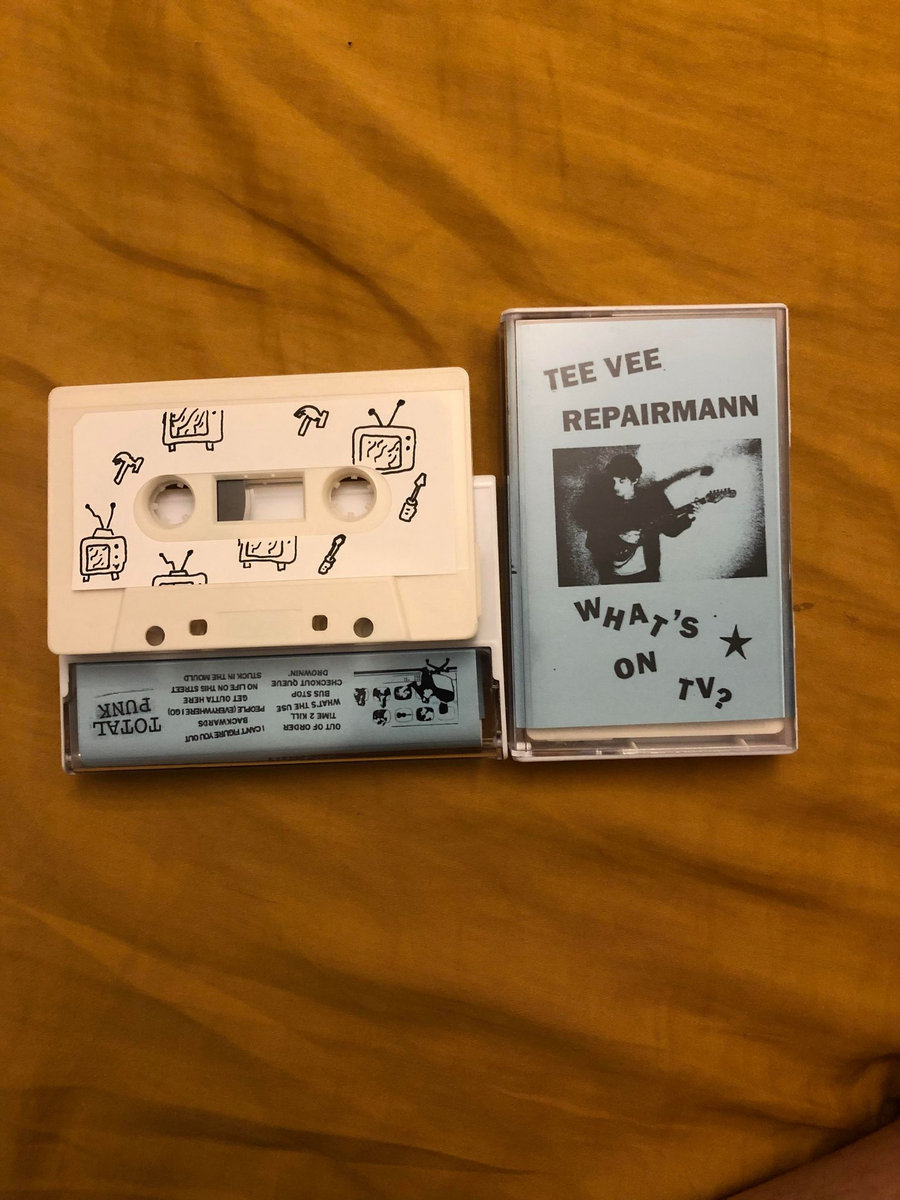
Been hearing a lot about new benchmarks in power pop lately, mostly from bands that seemingly don’t understand that there are two end points on the power pop spectrum: sticky sweet hooks and guitar riffs that make me want to jump off my couch while windmilling. Sometimes a band just gets it. TV Repairmann has figured out that “what if all those 90s bands that claimed to be influenced by Big Star were fronted by a snotty punk guy” is the ultimate formula for power pop success. What’s On TV? is Exploding Hearts for a generation of bedroom Tascam punks and it’s also the tape I’ve ended up playing the most this year so far. Perfect for cooking chicken thighs, making salads, and sending mindless e-mails.
While Repairmann’s (real name: Ishka Edmeades, but isn’t it funnier to call him Mr. Repairmann?) other bands like Gee Tee, Research Reactor Corp., and Satanic Togas aim to wallop the listener over the head with brash punk or steamroll them flat with sheer speed, What’s On TV? actually cares to take its time and be a little sweeter. What’s On TV? provides the best ratio of hooks to dollars spent that any tape has ever provided me, starting with the pining “Out of Order” and not letting up until “No Life on This Street”’s glammy gutter punk. “Get Outta Here” feels like a blown out lost radio classic, all AM radio hooks crunchy guitars. It’s a summation of what Repairmann does best on his solo work: ultimate sunny day anthems with just a hint of melancholy, filtered through tape hiss and cranked up loud.
The vocals, guitars, and songwriting hit the bullseye in the Venn diagram of “simple” and “effective.” Fans of Gee Tee will feel absolutely at home here amidst monophonic synths and whip crack drum rolls, but where other homespun punk projects like that tend to make themselves small, TV Repairmann goes big. This is music for sensitive punks who aren’t afraid to rock. That seems like it could be a backhanded compliment, but it’s the mode I’ve found myself the most in this year.
“Backwards” is the single best song I’ve ever heard from a lo-fi punk band in a while. Every single aspect of the song, including the opening chiming guitars, is a hook leading to another hook leading to me grinning ear to ear and nodding my head along. I feel like I’m going to wear out my copy because I keep rewinding it over and over again to relive the ascending and descending lead guitar mimicking the “falling down” lyrical motif. If that’s not a ringing endorsement, I don’t know what is. What’s On TV? is another huge win for Edmeades and Total Punk Records – a match made in punk heaven.
Cassette Sold Out at the Total Punk Bandcamp! Still Available (in imported quantities) from Mr. Repairmann’s Bandcamp!
Tongue Depressor & Weston Olencki – Don’t Tell No Tales Upon Us
3.13.23 by Matty McPherson
3.13.23 by Matty McPherson
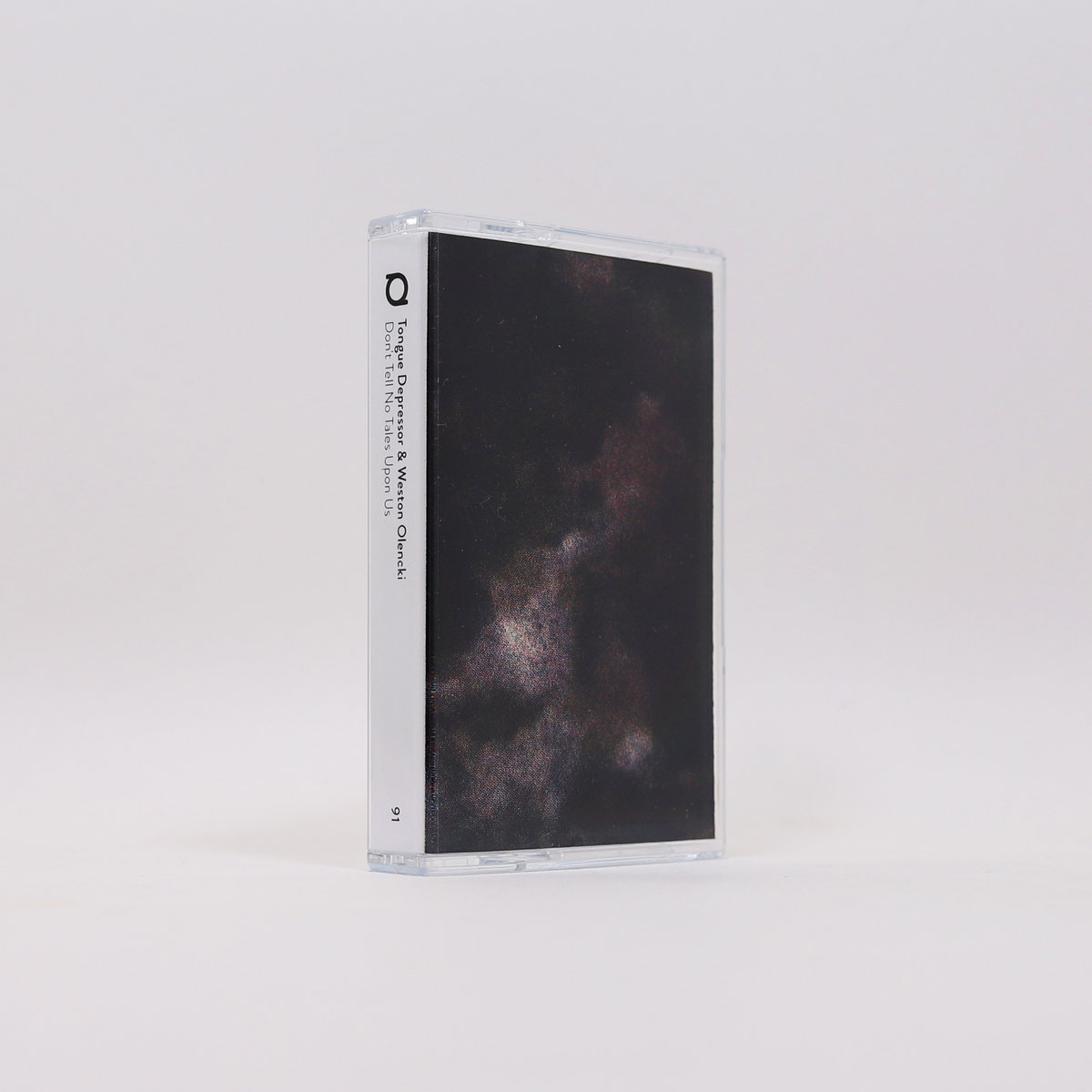
Dinzu Artefacts continues batch processing and curating of the highest magnitude. New titles in the month of February have been making their way to the hi-fi. In between bouts of anime and Bandcamp tape filing (have you ever tried to catalog DIY tapes? It’s sort of impossible! And you can’t make entries on the mobile app! Flop-ass software!), I have been giving late night samples. The three this month are deep longforms. Two are pushing near or past the hour mark. If there’s anything I’ve noted about a Dinzu Artefacts bundle, it’s that the variety with time often means either the LONGEST or the SHORTEST tape of the month is highlight; a most unusual circumstance akin to picking sticks. This time, I find myself most enamored with the latest from the Tongue Depressor duo & their collaboration with Weston Olencki; a brevity-laden affair of drone harmonics. The kind that glistens at the witching hour and ignite a strange set of surrealist mantras and images to go inward, before returning outward with force.
Henry Birdesy and Zach Rowden are longtime conspirators, with ties down the New England coast and with Crazy Doberman, amongst a longstanding career of dronery as Tongue Depressor. Birdsey’s career across a magnitude of labels, monikers, and instrumentation has seen him develop a rather strange beckoning towards a kind of land-art induced gospel for masses between 1 to a few dozen folks. For the two piece, Birdsey turns to Bagpipes & Rowden takes up Bass. Meanwhile, the South Carolina born, Berlin-based Olencki brings out Trombone. Try to make sense of this formation, it’s not supposed to be a crystal clear harmony in ultraviolet you may tell.
The trio both enforce and reject the roles of their respective instruments. Side A’s Tapping Season is perhaps TD and Olencki’s standard MO. Tongue Depressor create a blackened tar of a drone, with a viscosity thick as imperial stout. The bagpipes harmonize with a thrilling electricity to their harmonics, an all out assault bolstered by the bass! Olencki takes to the wall of sound and attempts to find a place to scowl and grovel with the trombone, creating a cracks across the surface of the piece. You can opt to follow the noise or lay awash in the drone and strike a pre-conscious image from there.
If Death Be Printed On His Face opens the palette outward instead of the intense inward focus of Side A. There’s droning cassette loops that are plague-stricken and gloomed amongst a flicker of water. Coils and sawblades, even creaky gates(!) rummage amongst the wastes of this soundscape, rustling and looming omnipotently. It recalls the bad-acid psychedelic beaches that have come to define Bill Nace’s 2020s works, or gloomscapes of Arvo Zylo and German Army. A banjo is summoned, but so taken out of its immediate sonic properties it only adds to the apocalypse of the b-side; it sounds closer to pedal steel wobbling and budging through a stomachache. When you do zoom out of the piece, considering the slow lumbers of it’s movement instead of the moment-by-moment blows that make it a hat trick of a sprawling piece, it’s clear to see that the trio was creating an inverse to the drone of their first half; especially when it strips itself halfway through to open those stringed drones. There’s an aching beauty to that back half I’ve found. The kind that document the emotions of a cowboy who’s “too old for this shit” and wants to ride off into the sunset, but also knows that with the heat-death of the sun approaching sooner and sooner, it’s just more convenient to soak in the moment. Nothing cruel about it, just ruthless pragmatism.
And that’s what perhaps makes the trio’s release so damn rewarding and the highlight of the the Dinzu Artefacts batch. It cuts to the heart of the label’s strange tightrope walk between “free jazz” and “free field recordings”; the grey area/no man’s land where soundscapes exist as small zones to contemplate feelings that aren’t exactly compressible nor can be abstracted. They’re just experienced like old tales from times long ago.
Limited Edition of 200 Available Now at the Dinzu Artefacts Bandcamp!
Nyokabi Kariuki – FEELING BODY
3.10.23 by Matty McPherson