Steve Long – Code Talker II
11.8.22 by Matty McPherson
My greatest achievement all year may remain sharing Keith Fullerton Whitman’s Playthroughs with two dozen individuals, and finding out that about two dozen people indeed quite enjoy the process of a long sustained drone. Now since then though, I’ve had hunger pains for a longer, more singular drone. And don’t get me wrong, we’ve had an incredible Pipe Organ drone piece this summer with Living Torch. Yet that is one for the CD heads & at half an hour, still feels TOO short! I need thick C60 with not two, but ONE single piece stretched out over that hour.
I suppose Astral Spirits has understood that need succinctly. The label has spent the past two years refining its capacity for what a free noise label can entail; often at the cost of a lot of jazz vinyl overshadowing what was for a time inconsistently released, yet meticulous fascinating noise tapes (with greater global curation). I honesty haven’t reviewed any of these batches because personal words and situated reports elude me, as well as a shift in personal tastes that honestly err closer towards Astral Editions (with its own upcoming tape batch that has caught me hook, line, and sinker). Yet, there’s always a joy to opening the Bandcamp email and being giddily surprised, and in the best of cases outright transported. Right now, with Steve Long’s Code Talker II, I’m legit being transported out of the tasting room where rick rubin produced strokes is blaring, and towards a 4th dimension that seems to collapse the five senses into a blank slate. I am as much a part of the piece as it pervades over the sound system.
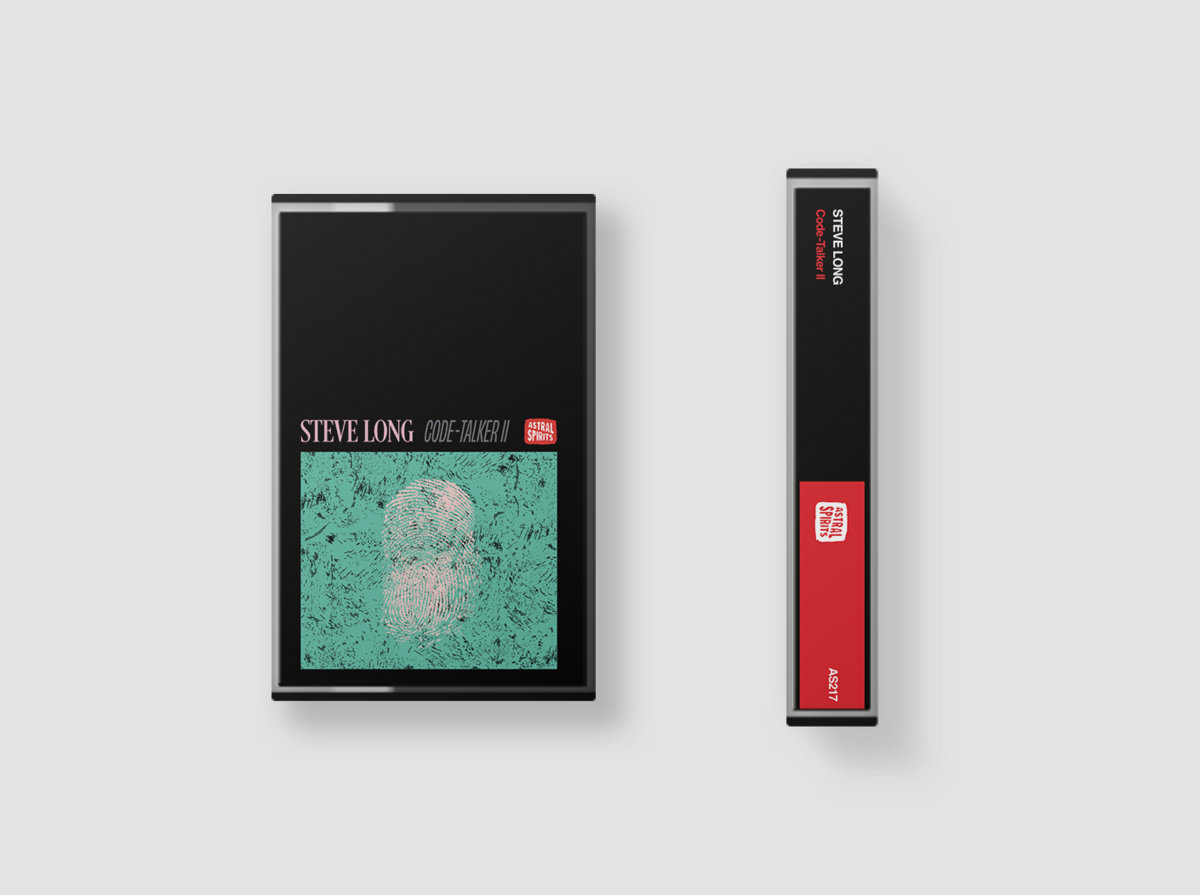
Code Talker II is 56 minute and 30 seconds, with two samples available on bandcamp. It features Steve Long on Pipe Organ and Henry Fraser on Double Bass. If you added a minimal drum beat to this, you’d be a Kompakt techno piece from 2k2. If you added a moody synthesizer, you could probably accidentally fake yourself into thinking you were listening to an Ohio komische tape circa 2k9. If you added a litany of bird sounds or field recordings, well then you probably actually are listening to a Pauline Oliveros composition from the 1980s. Long and Fraser’s lockstep constitutes an honest to god immaculate template for a drone, faintly rising in volume over the near-hour, scratching out a hypnotic sine-wave. Not quite brooding, not quite fully reverent (until that final stretch where all cards are on the table), but damn near precocious and fleet! Code Talker instills a utilitarianism in listeners. At its peak you have a cocoon of lightly crushing, yet positively healing come-down tones reverberating. And the longer you fall into the cycle, naturally the more precise and ecstatic the tones reveal themselves to be. A radiance really starts to circle around in the 35 minute mark that swaggers to the closing. Yet all the while, this remains a rather personalized breathing exercise that never loses sight or cheats you out. It is a radically honest execution of a drone.
If Long’s piece strikes you as a featherweight spell or a talismanic sleight, I would not be surprised. Long is a native Brooklynite that teaches at the New School, in between guest lecturing prestigious high school music & art programs and grant-writing his way to checks from the City Artist Corps. He’s been tinkering with the Code Talker series since 2019, envisioning small glimpses of the music as far back as 2005. It appeared in recorded form last year on Nat Baldwin’s TripTicks Tapes in an edition of 60 cassettes. A third variation with Fraser and John McCowen is to be premiered this fall, with an additional two pieces adding towards a quintet in the works. This second variation on Astral Spirits may be the best encapsulation of the piece’s pertinence. Long has dutifully noted that the name is a reference to the “code-talker paradox” which is a reference to the work of linguist Mark Baker’s analyses on WWII Navajo code talkers and the “paradox in which language can both assist and hinder communication”. He personalized it, considering the ways in which as a gay man he has to contemplate his own presentation of language within various in-groups. Considering the sonic touchpoints I brought up a paragraph above, the piece casually yet inspiringly hits that mark. And as a result, it does ground and frame any space that it is beamed out of over a hi-fi audio system. It’s an act of sanctity and spatial purification; not a containment but a reclamation and honest hope to provide such spaces where words and barriers can collapse.
Shockingly very few tapes I’ve heard this year have tried to endeavor themselves to this lofty of goals. In fact, really only the work of Eris Drew and Maya Bouldry-Morrison’s T4TLUVNRG dance tapes (Beige’s undersung AMEN! Vol 1. and Maya’s own Love Hypnosis Vol. 2) have hit this peak, albeit from a contextually different angle. It puts Long in tip top company though, and stands as one of the finest drone releases on tape in 2022.
First pressing of 200 copies. Available from the Astral Spirits Bandcamp Page