Tabs Out | Ruin Garden – s/t

Ruin Garden – s/t

11.9.20 by Ryan Masteller
I know what I was doing in spring 2020: sulking. Sulking, and a lot of nothing. There was nothing happening. Nothing to look forward to. Nobody to chatter with. No incompetents to holler at. (Well, in my vicinity, anyway.)

What was Ruin Garden doing in spring 2020? A lot more than me, I can tell you, if this self-titled cassette tape is any indication. The recording project of the elusive “JKA” of Baton Rouge, Louisiana, Ruin Garden may have been planning “Ruin Garden” all along, but the timing couldn’t have been better. A treat for all senses – yes, even smell – the tape slowly unfurls an impressive “collection of static loops and drones from archival tapes, found sounds, and electronics,” each one a completely different vibe and result. Sometimes it feels like you’re underwater, perhaps in a deep-sea trench, or maybe you’ve just stuck your head in a fishbowl. At other times it feels like you’re in slow-motion hyperspace, if that even makes any sense, separated from the vacuum only by a thin membrane surrounding your body. At still others, you might be standing next to a wood chipper as somebody continually chucks cases of pint glasses into it.

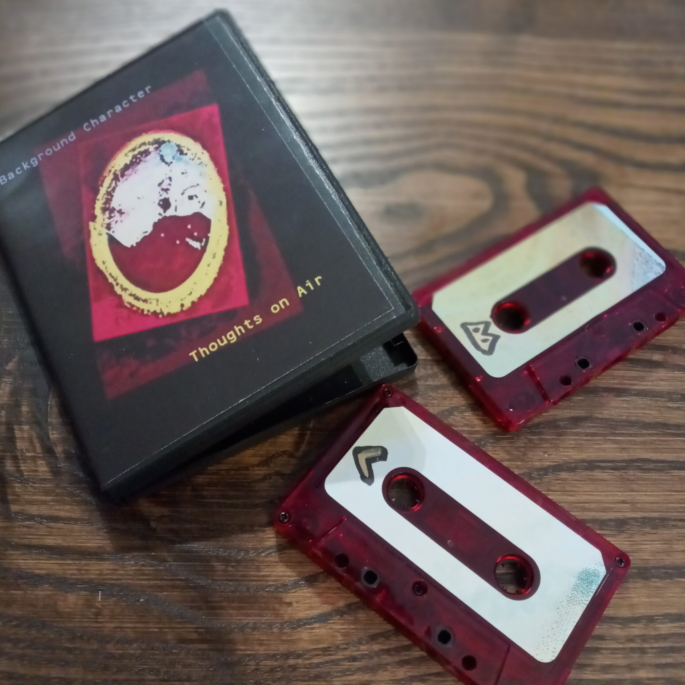
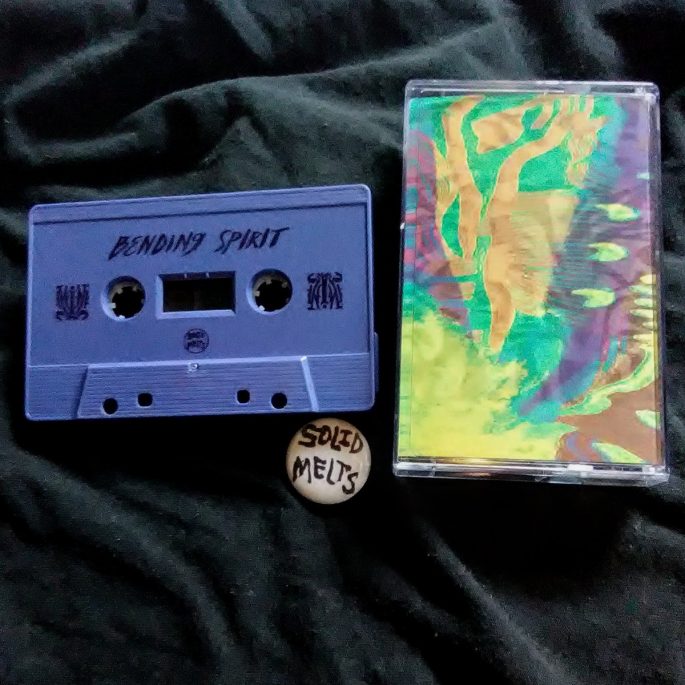
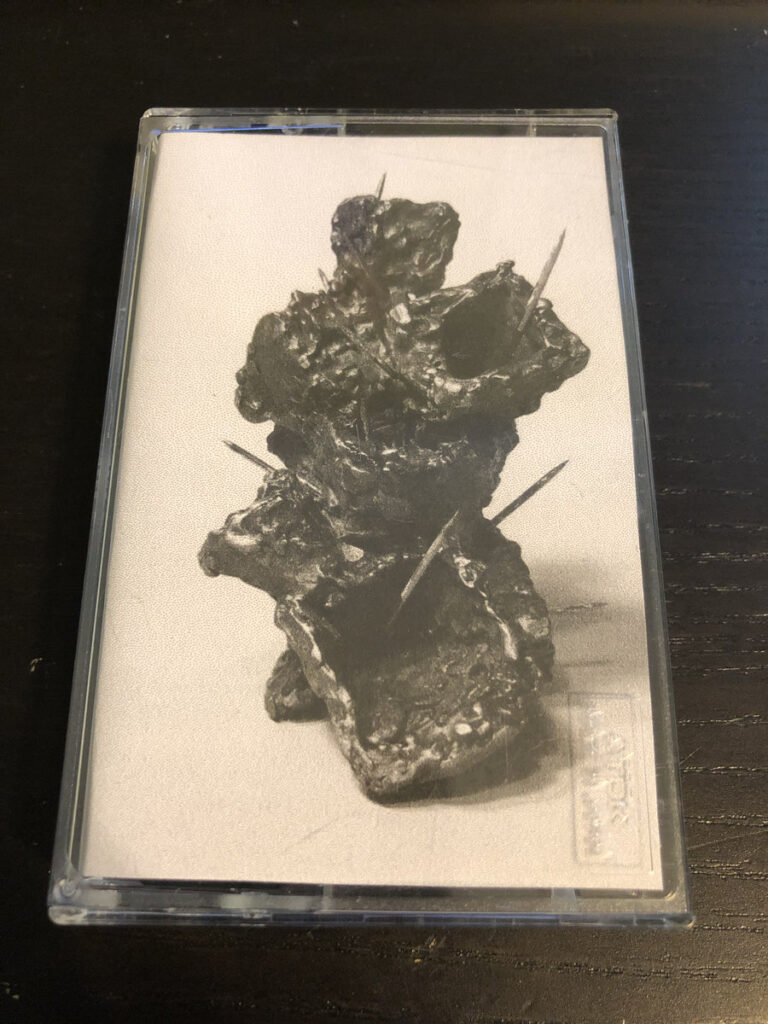
Regardless of what the heck “Ruin Garden” is doing, it’s clear that that JKA has kept themselves busy throughout a life of isolation. JKA’s work is quite industrious too – the tapes themselves are recycled TDK D90s, and there’s just a hint of artwork on the shell to suggest that this isn’t a blank (although I wouldn’t store the tape far away from the case – you’ll never figure out what it is otherwise). Fifty of these were made. Only two remain. I’ll let you get yourself in gear while I sit back and listen to the alien probe from Star Trek IV pretend to make whale noises.
Tabs Out | Lucas Brode – Vague Sense of Virtue and Other Dreams of Mundane Profundity

Lucas Brode – Vague Sense of Virtue and Other Dreams of Mundane Profundity

10.27.20 by Ryan Masteller

Chuck your stupid synthesizers and electronics gear into the river, you experimental goofuses! Here’s where the real forward thinking is: guitars and drums. Now I know what you’re going to say – actually I don’t, because I think you’re an open-minded bunch in general, and your embrace of traditional instruments is fairly wide. But here’s the point: I don’t think you’re going to hear any synthesizers or computer music on “‘Vague Sense of Virtue’ and Other Dreams of Mundane Profundity” by Lucas Brode, unless of course I’m being really thrown off by a “guitar” or “percussion” setting on somebody’s Casio keyboard and I’m leading you into a trap. But I’m pretty sure I’m right about everything I’m saying here.

Lucas Brode watched a LOT of David Lynch and listened to a LOT of Paul Motian as he came up with the framework of “Vague Sense of Virtue,” and the result might be as you’d suspect: moody, cinematic jazz pieces with percussive flourishes (courtesy of drummer Kevin Shea). Surely these pieces wouldn’t feel out of place in “Fire Walk with Me” or “Mulholland Dr.,” and you can almost envision Michael Anderson’s diminutive “The Arm” backwardly rubbing his hands together in glee as if we were about to feast on some creamed corn garmonbozia as something like “You will be remembered simply as an idea” plays over the scene. Or “How many layers further into flow?” Take your pick, honestly – there are seven good options here.

Utilizing Pauline Oliveros’s concept of “deep listening,” Brode and Shea took stock of their environment and played directly to it, injecting a little “ambient” into this whole thing. They play the room, letting the sound interact with the walls and themselves, letting it alight on their bodies like those floaty sentient seed pods (or whatever) from “Avatar.” And while David Lynch is no James Cameron, he definitely knows how the (literal) tone or timbre of a scene works as an immersive experience. Lucas Brode has now proven that he also knows how to do that. WithOUT a synthesizer.

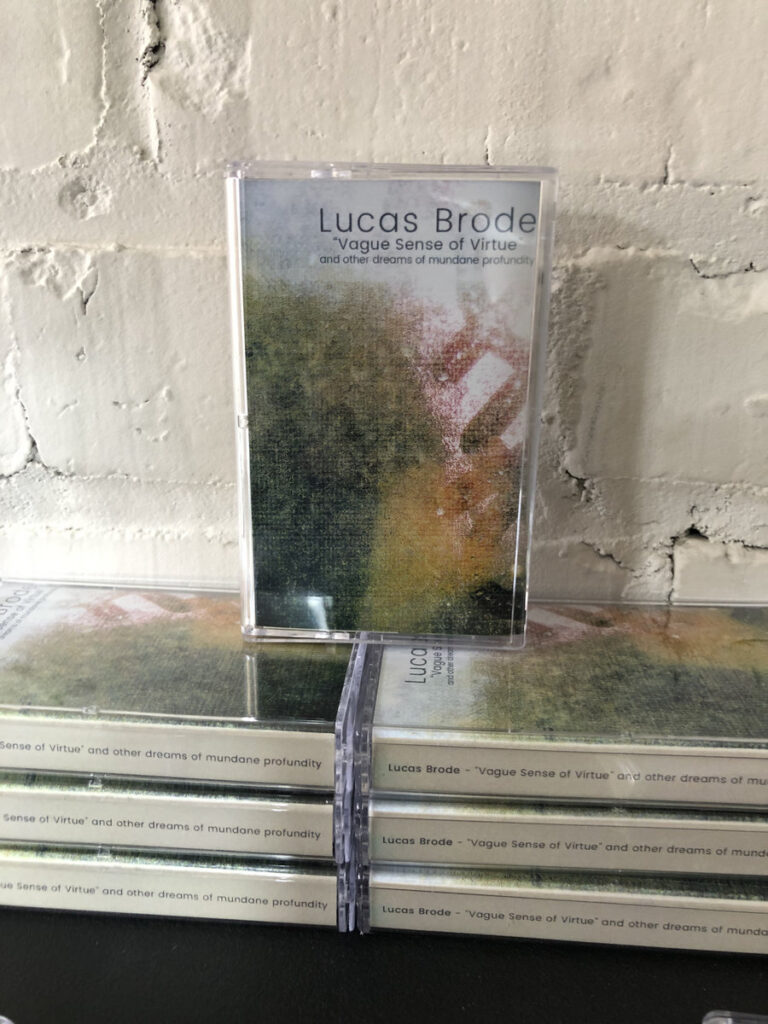
Cacophonous Recordings pressed a cool tenth-grand (that’s 100) of these, with a nice 8-panel glossy cardstock j-card.

Tabs Out | Episode #161

Sunwatchers – HausuLive 1: Sunwatchers at Cafe Mustache 4/13/2019 (Hausu Mountain)
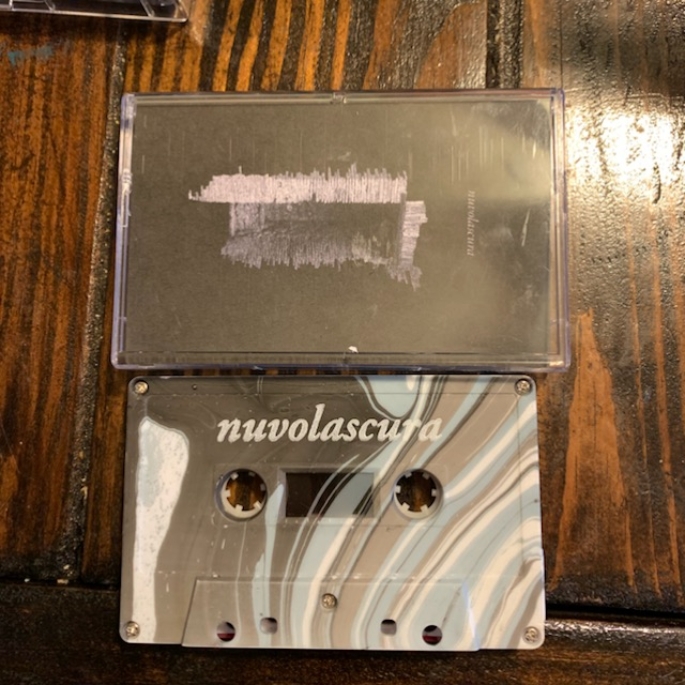
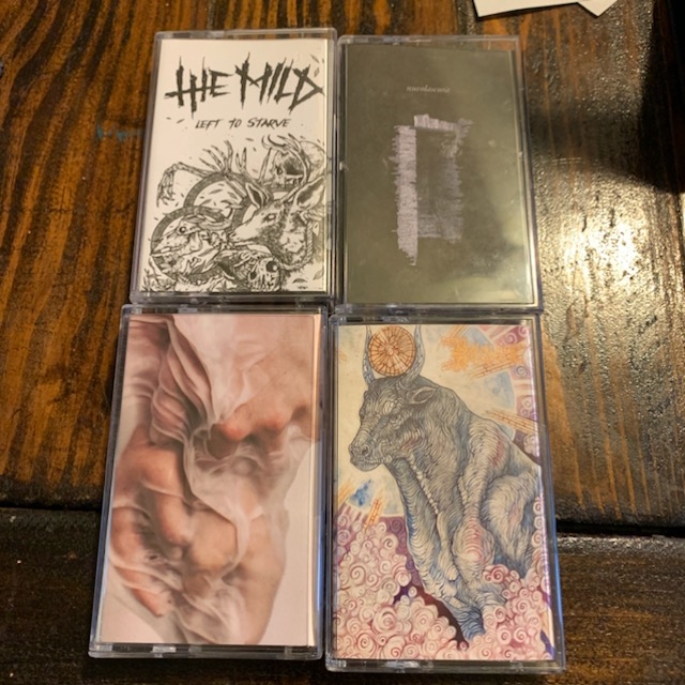
Nuvolascura – s/t (No Funeral)
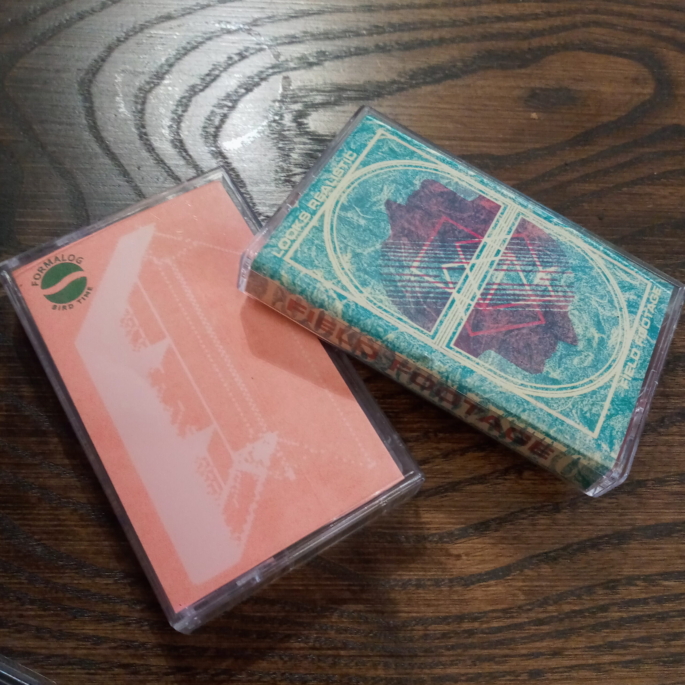
Form A Log – Bird Time (Refulgant Sepulchre)
Oathbreaker – Rheia (Deathwish Inc)
Andrew Weathers Ensemble – The Thousand Birds in the Earth… (Full Spectrum)
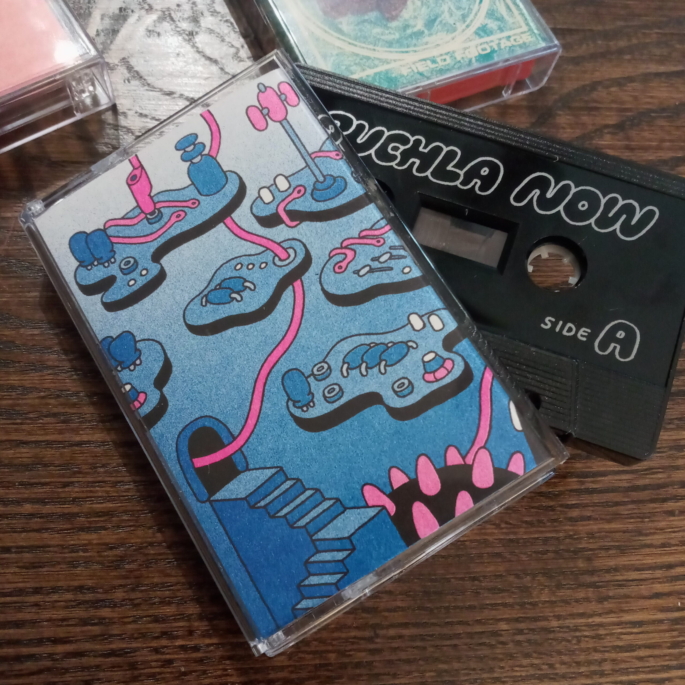
Steve Horelick – Buchla Now compilation (Ultra Violet Light)
Looks Realistic – Field Footage (Baked Tapes)
Bull of Apis Bull of Bronze – Offerings of Flesh and Gold (Tridoid)
The Mild – Left to Starve (Dullest)
Sangam – Soul Generator (Display)
Thoughts on Air – split w/ Background Character (Low Orbit)

Tabs Out | M. Geddes Gengras – Time Makes Nothing Happen

M. Geddes Gengras – Time Makes Nothing Happen

10.21.20 by Ryan Masteller

Alright Gedheads, get hip: M. Geddes Gengras has another slab of Hausu mayhem all ready to cram into your ear canals. Just sit still, right there – we’ve got the industrial-strength crammer (comes with every tape) (not really), and the sooner we get to work on this, the sooner the unpleasant cramming part is over and you can sit back and relax and listen to “Time Makes Nothing Happen” as if it were meant to be a part of your body, as it now is. 

Wait a sec – you haven’t fashioned a cassette-playing niche between your ears by which you can have the sound encoded to spools of formulated ferric oxide pipe directly into your prefrontal lobe? 

Yeah, me neither, I was just checking to make sure.

Still, the sounds from this Ged burner FEEL like they’re going straight to my brain, like a pint glass of champagne that you chug through a straw in your nose. The master of synthesizers flits over a bunch of crazy patches, melding rhythm, and melody in a free-for-all of juiced fantasy, a pixilated cartoon memoryscape in the color palette of a bag of assorted Starburst. Listening to it is like witnessing false-color animated gifs of nonexistent animals. My brain sort of feels like it’s been run over by a dump truck made out of Pop Rocks.

Yeah, I hear you, I know exactly what you’re saying! What is the dude who made the absolutely majestic but oh so ambiently taffienated “I Am the Last of That Green and Warm-Hued World” (also on Hausu Mountain), not to mention “Icon Give Thank” with Cam Stallones and the Congos and various other outer-space zoners (my introduction to Ged’s work was the first Voder Deth Squad tape on Stunned), doing in such a sugary place? I can give you a hint – who cares! Turns out M. Geddes Gengras is a bit more than a one-trick … er, thirty-trick pony, isn’t he? He’s got room for a thirty-first trick. “Time Makes Nothing Happen” is the thirty-first.

Still, there are some very Duppy Gun–ish dub workouts in here. That’ll probably always be an inspiration for the solo material.

“Time Makes Nothing Happen” drops on Hausu on November 13, so depending on when you’re reading this you’ll either be preordering or regular ordering. 

Related Links

Tabs Out | Ley Lines – This Rock in My Kitchen Used to Have a Purpose

Ley Lines – This Rock in My Kitchen Used to Have a Purpose

10.19.20 by Ryan Masteller

When guitarist Noah Depew and drummer Jayson Gerycz got together as Ley Lines (with Doug Gent on occasional sax), they did so without having to wear masks or wipe down door handles or groceries. This was 2019, people, the very last year where we didn’t have to worry about which germs were going to kill us first! So they could enter the same confined studio (or practice, or whatever) space together, and hover as close to each other as they wanted to (well, Depew could – drummers can’t really hover). They could spend hours in that confined space. They could crank out a massive amount of tunes.

I don’t know how much content Depew and Gerycz (and Gent) actually generated, but what ended up on “This Rock in My Kitchen Used to Have a Purpose” sticks us right in the middle of their recording process. Like, almost literally – if by literally I mean not really at all but only seeming like it. I feel like I’m also hovering there in the room over the kit, as Depew ventures closer, scratching and clawing at his guitar strings while Gerycz smacks at the different parts of his kit, trying to wrangle as many disparate percussive sounds as he can before everybody falls over in exhaustion and all the screws come out of the instruments. There are elements of Bill Orcutt meeting Claire Rousay, but then it doesn’t sound like that at all, just bubbles of whatever that amazing weirdness would sound like. (And it sounds like Ley Lines sometimes.)

So what purpose could that kitchen rock even have had? I guess you can cook things on really hot rocks, but I’m not really sure that’s the ticket (although “This Rock” does, indeed, “cook”). Paperweight? Knife sharpener? Who knows. Maybe the kitchen is actually the wreckage of a kitchen, and the rock smashed it all up. That’s actually what I’m going to go with, especially with the way “Peer-to-Peer Performance” ends the tape on an indoor-tornado-like note. Everybody’s arms spinning out everywhere, guitar necks bending like they’re made of gelatin. Wild stuff.

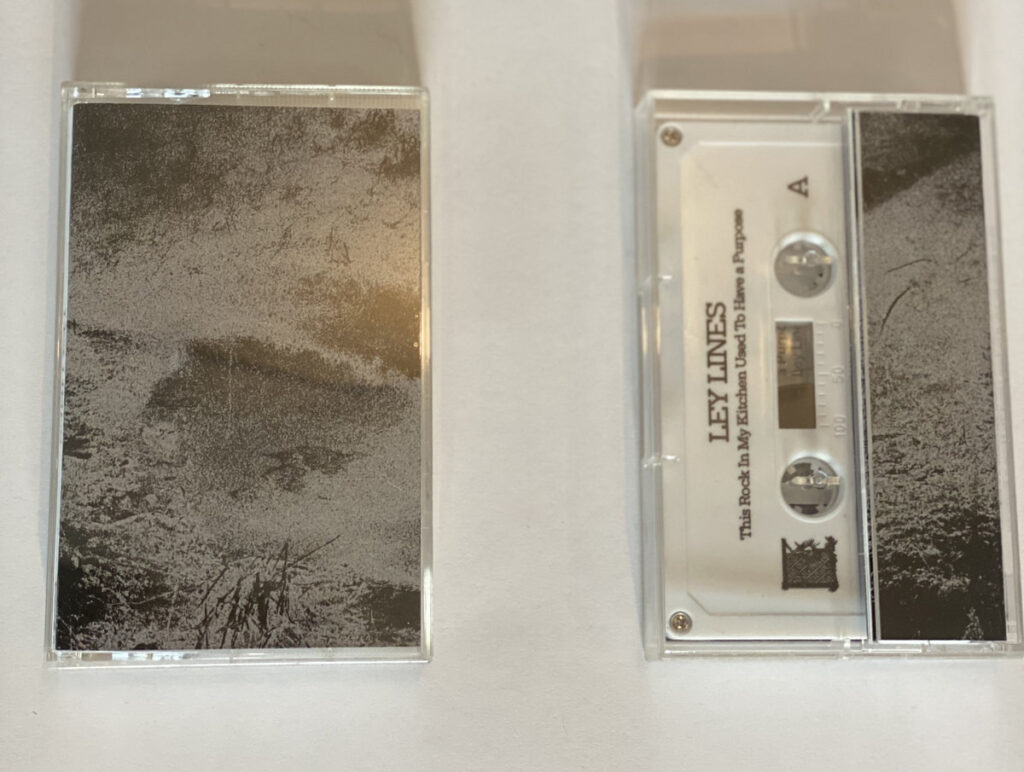
Edition of 100 available from Sonnedecker

Related Links

Tabs Out | The Cradle / Superflower – split

The Cradle / Superflower – split

10.16.20 by Matty McPherson

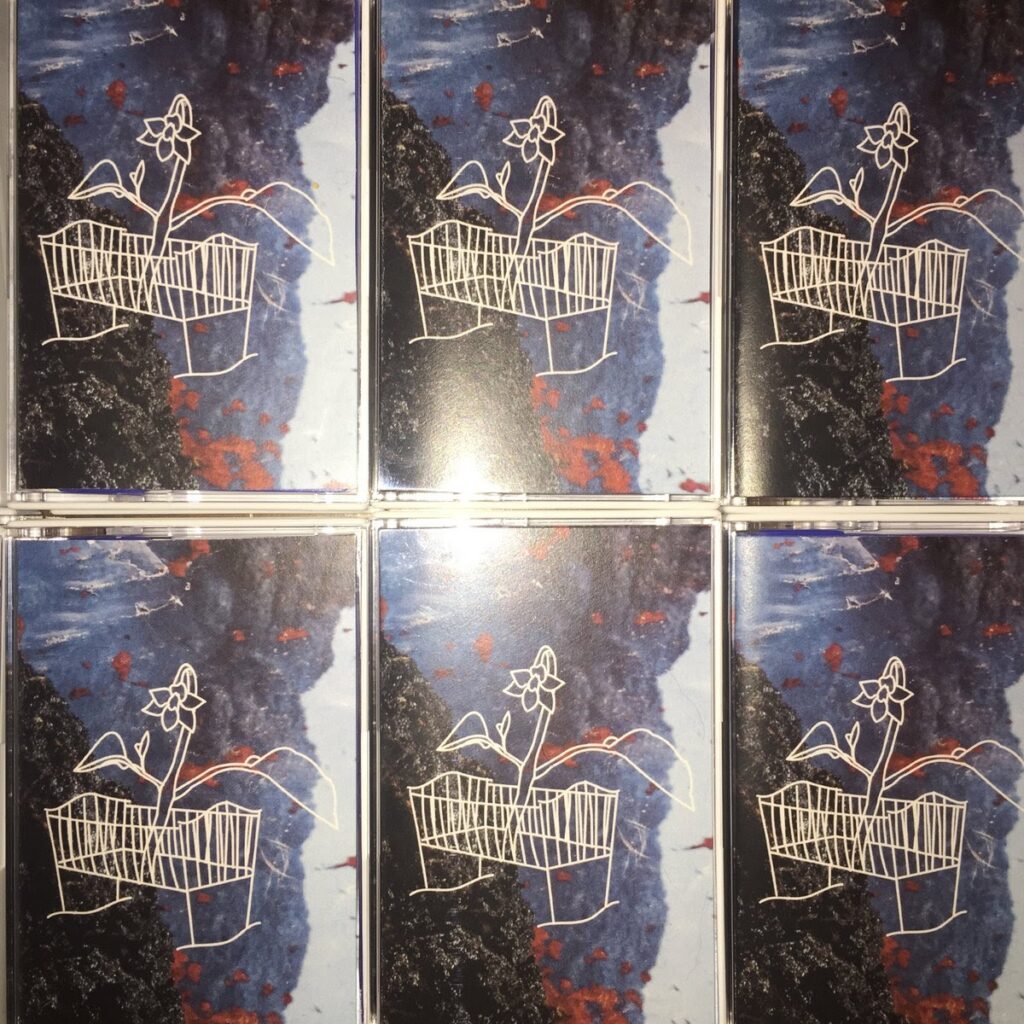
It is officially Fall on the central coast, which means that the fog comes out from the sewers below, nothing more and nothing less. I’d usually report seeing more bodies around, but it seems that everyone is staying in their bedrooms-recording delicate pop on their Tascams or what-have-yous. Yet, the people have always been doing that whether it is the start of fall or end of winter. To quote Superflower, “It’s so quiet down here,” and I know that far too well. Her split with The Cradle, recorded back in February that finally made its way to cassette on the Sarah Laughs label in August and finds both artists capturing auditory diaries of observation and porch gazing balladry.

Superflower (aka Zoie Reamer) has scant information circulating at the moment, mayhaps on purpose. so I’ll stick to what I know best: the sound. Over her four tracks (a 12:25 session you’d swear was 15), Reamer sticks to fickle finger picking folk, that crosses between sleepy echo diary and humble pop. Harmonized overdubs of her voice aren’t just melodic, but turn the lo-fi session into a real batch of raw prowess. Tracks like Sparro give a sensation of galloping through the countryside, even if it is just guitar coming through your speakerbox. The standout moment might just be the educational synth whirl on “Roll Away”, an astral projection that looks inward before transitioning to a steady ditty fit for a singalong.

The Cradle (aka Paco Cathcart), has been around the bush for awhile. Most recently, besides releasing tapes on NNA, Cathcart has been assisting Palberta (and Lily Konigsberg) outflowing of DIY pop. His half of the tape (dubbed Splitting Rocks) can be described in one word: ramshackle (the good kind). Cathcart walks a fine line between twee delight and rudimentary fodder. Yet, upon close inspection, it is easy to see how the Cradle always comes out on top. He’s got a killer sound:a jittery accordion (or a library of minimal sounds) that drones at the rate of a heartbeat, with observational wit that always retains its affability. Highlights include an earnest plea to his mom to listen to “public radio: (“we can watch Rachel Maddow/and then talk about how/the interests of her company/might affect what she says on TV”), a “nice innocuous joke” towards two clerks over the merits of which corporate coffee is preferred, and a genuine excitement at being funny (“hahaha”).

All together, the 12-track tape (4 for Superflower and 8 for the Cradle) is exactly the kind of mid-day pick me up for the inner pop lover in all of us. Pass along to your college radio friends and have them turn “public radio” into the anthem of our time.

Edition of 50, with limited copies available here and here.

Tabs Out | Nandele Maguni – Plafonddienst

Nandele Maguni – Plafonddienst

10.14.20 by Ryan Masteller

I can be sneaky too. I can be doing something, like emptying the dishwasher, and then all of a sudden, when you’re not expecting it, I’m doing the worm across the living room! Totally surprising everyone in the vicinity with my bodacious moves, just highlighting how quickly I can turn on a dime from inconspicuous activity to heightened all-star dominance. You may be wondering, “How’d you drop right into the worm without any music playing?” to which I’ll answer, “How do you know there isn’t music playing? And if there isn’t, why can’t it be in my head?”

Why can’t it indeed.

Nandele Maguni is master of the shift, the subverting of expectations. The Mozambique-based DJ and producer steers from lengthy, low-impact samples as introduction to beat-heavy soundscapes that somehow manage to balance ethereality with density. Like me with my low-concept repetition of clinking cutlery and crockery before busting some righteous moves, Maguni builds up in his mind the swirling strands of narrative before bounding headlong into the main event. And when he gets there, you should probably be gripping something pretty tightly, because Maguni’s work is nothing if not sonic representation of temporary-outdoor-dwelling fornication: fucking INTENTS. 

(I of course mean “intense.”)

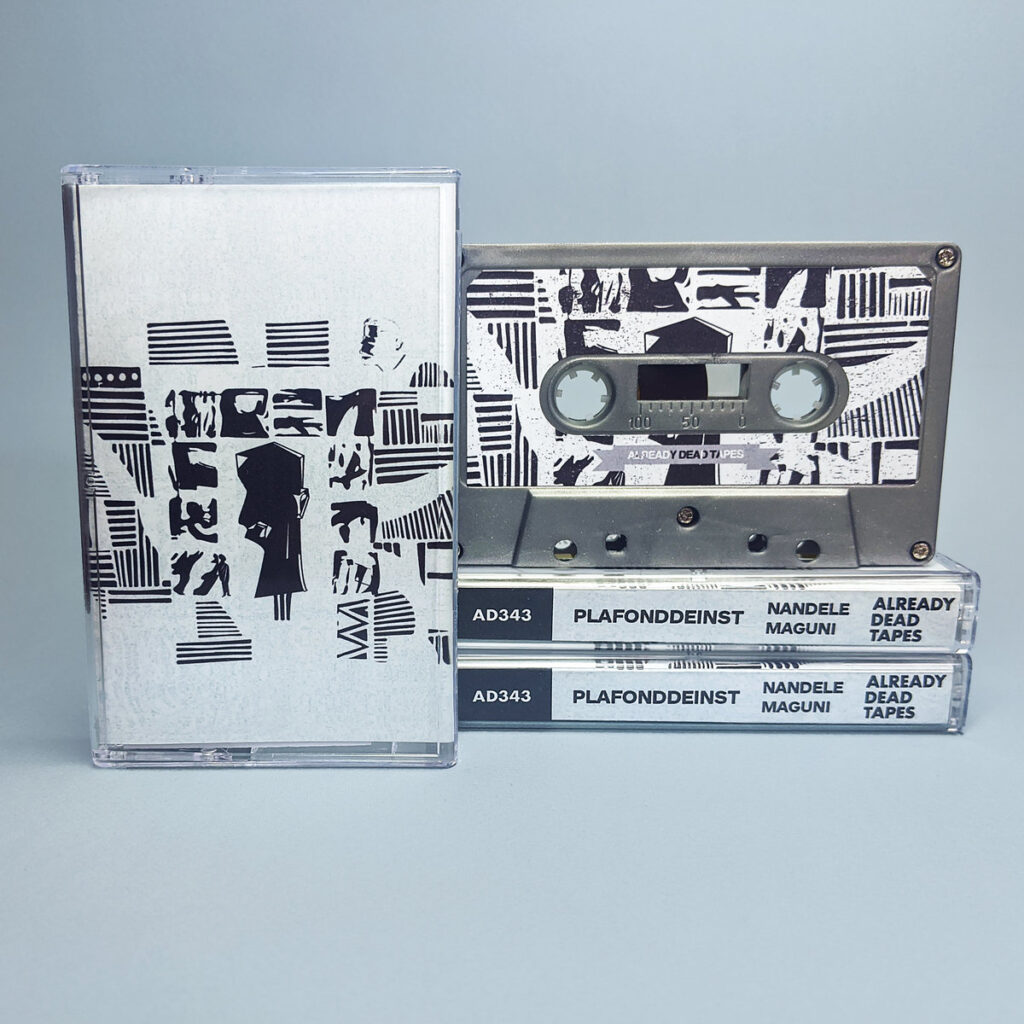
So come for rhythm and melody, stay for all the left turns and paths to the unexpected. And sure, you too can worm right out to “Plafonddienst” – it’s actually what I was listening to when I was doing the dishes to begin with (in case you hadn’t figured that out). Tape wildly available in an edition of 100 from Already Dead.

Related Links

Tabs Out | Gram Hummell – Meshes of Exotopic Escape

Gram Hummell – Meshes of Exotopic Escape

10.13.20 by Matty McPherson

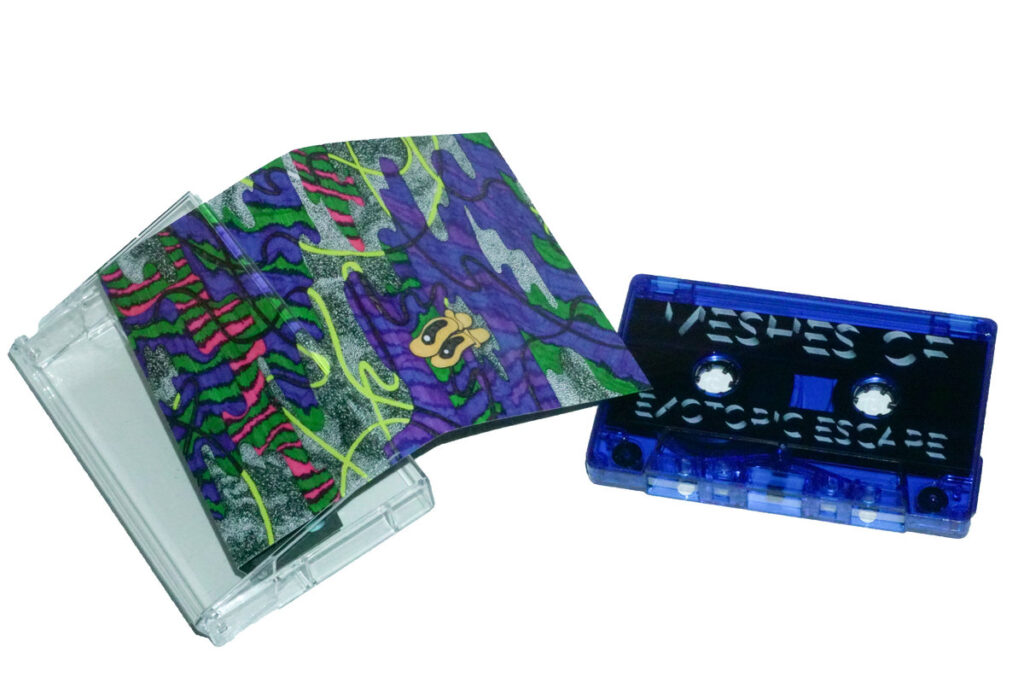
Sans Irréalité is a new tape label based out of Baltimore, Maryland with intentions to release “interesting electronic musics, tellurian and interstellar.” Their inaugural release, Meshes of Exotopic Escape, from Baltimore stalwart, Gram Hummell, nicely fit in all three boxes (and not just because it was released on 4/20). Hummell is able to traverse eclectic territory without giving a damn nor forgetting to better the collective vocabulary prowess of the Tabs Out community!

Take the opener of Side A “Telesm for Three Voices”. I’ve no idea what a telesm was until I spent ten minutes on dictionary sites to discover that it’s a talisman-huge score! The track opens with fridge buzz static waves, as if my boombox was having trouble playing, before being hijacked by someone that states, “I’m going to attempt and communicate with you telepathically”-and it’s none other than top dollar vocal synth, Microsoft Sam! Hummell (through MS Sam) discusses dystopia in meager 2019 words and ideas, before letting everything disintegrate into harsh noise…and then rebuilding itself with vocal samples turned dance a la The Field. Part-brainwave, static transmission, and post-field recording glitch synth bath, the expansive ground covered on “Telesm” is traversed with featherweight precision. Nothing ever feels out of place or poorly contrived, it just moves at the pace of Hummell’s brain.

Side B’s “Interlude/Korybantic Dolphin Dance/Heka.dylib/Dog Solitude/KDD-2” might be a string of five tracks or a genuine attempt to simulate the struggle of this aquatic techno lifer in under 15 minutes. Either way, close listens show how Hummell can traverse genres like its freeform lsd tv, no problem. Interlude may be quick, but through Korybantic Dolphin Dance (hey another word!), the track enacts an elliptical patch of head scratching pulse shimmers, xylophones, and hi-hats. You could make a dance vid or sacrifice to a (lowercase) god this part, real easy. Either way, it sets the tone for the back half’s pull to the womb. With a synth that recalls Pacific State and a callback to the Korybantic Dolphin Dance part of the track, Hummell lights up the dance floor, if only momentarily before a droney disintegration pulls the track to the finish.

The nature of this tape, which can descend from harsh noise to synth euphoria like you just fell down a trap door, have made it an excellent relisten. Perhaps it is perfect for your 1 person 2020 dystopia dance party in your roommate’s closet even! Get hip.

Top audio quality imprinted azure cassette with four-panel artwork. Edition of 50.

Tabs Out | Cranky Bow – The Blue Ball Session

Cranky Bow – The Blue Ball Session

10.12.20 by Matty McPherson

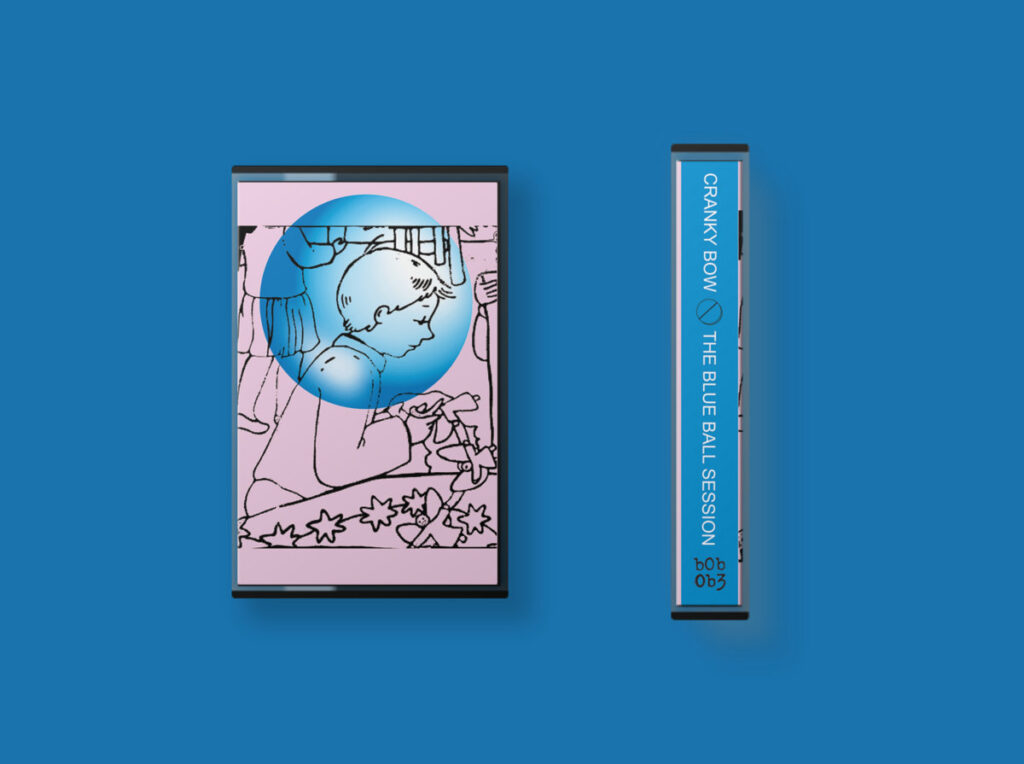
I assure you that Cranky Bow is not trying to rob you of any pleasure during the “Blue Ball Session”, an unnamed two part odyssey from the twisted mind of Gábor Kovács. His reputation over the last decade has been a steady one, transitioning from one alias to another moniker without ever stopping a consistent output of abstract and devious technological music-for European labels of course! 

“Blue Ball Session” sees Kovács going one step further with the Cranky Bow moniker, introducing elements of library music while keeping things in a delicate lo-fi balance. Part 1-perhaps better known as “There’s ‘Hell’ in Hello, But More in ‘Goodbye’”, opens with a “Goodbye!” that last 400 times as long as an Irish goodbye, with the faint pulse of what is akin to train wheels on the tracks. As it traverses away past the salutation, it becomes apparent that you, dear listener, have arrived at a resting place. A light synth welcomes you to a burial ritual in the graveyard of broken dreams. As it mutates and welcomes in odd percussive elements, the track still never loses its simplicity or desolation. The spaciousness provided by the track is indeed perfect for that room clean or when you need to find your dead wife in a small American suburb.

Part 2, also known as, “Cranky Bow is murdering the Hannah Barbera sound effects library!” is much more playful with the samples and noises that appear. No longer are you in the graveyard, but in the haunted train track (with a light piano playing) and…“is that the sound of an energy charge or spring loaded trap going off?”-I don’t know either, but it keeps the haunted train track piano going until suddenly the track introduces a warped library sample of horns, organ, and tip-toe indebted percussives. It’d fit like a glove in the hands of Jules Dassin, perfect not just for those noir soundscapes, but the tension offered from the heist. For the track’s back half, the tension seamlessly builds with the percussives and horns becoming less tethered to typical sound structures, popping in and out like it is death by a thousand cuts. As it ends with a vocal sample of a man speaking, probably sitting at a jazz lounge contemplating the things only a man can do, for the first time during the tape, you feel safe.

Library music is still a genre I rarely interact with across these cassettes. Understandably so, this is music made for the cheapest of cheap seat shows or the b-movie. Yet, seeing Kovács’ ability to squeeze it for the tension while stripping these samples of their temporality has kept me coming back. Talk about  “Goodbye!”

From Vadlovak Records

Tabs Out | Bodies of Light – Petrichor

Bodies of Light – Petrichor

10.8.20 by Ryan Masteller

I made a few Little League all-start teams in my time, because I was pretty good at baseball. My game was pretty well-rounded – I could hit for average and power, I was fast, I could field. So they lumped me in with the other “best of the best” kids, and we held exhibition games against each other. All that talent in one place, under one banner – it was pretty amazing to be a part of, and probably to witness. Just ask any of the dozens of shrieking parents present for those games – they’ll tell you.

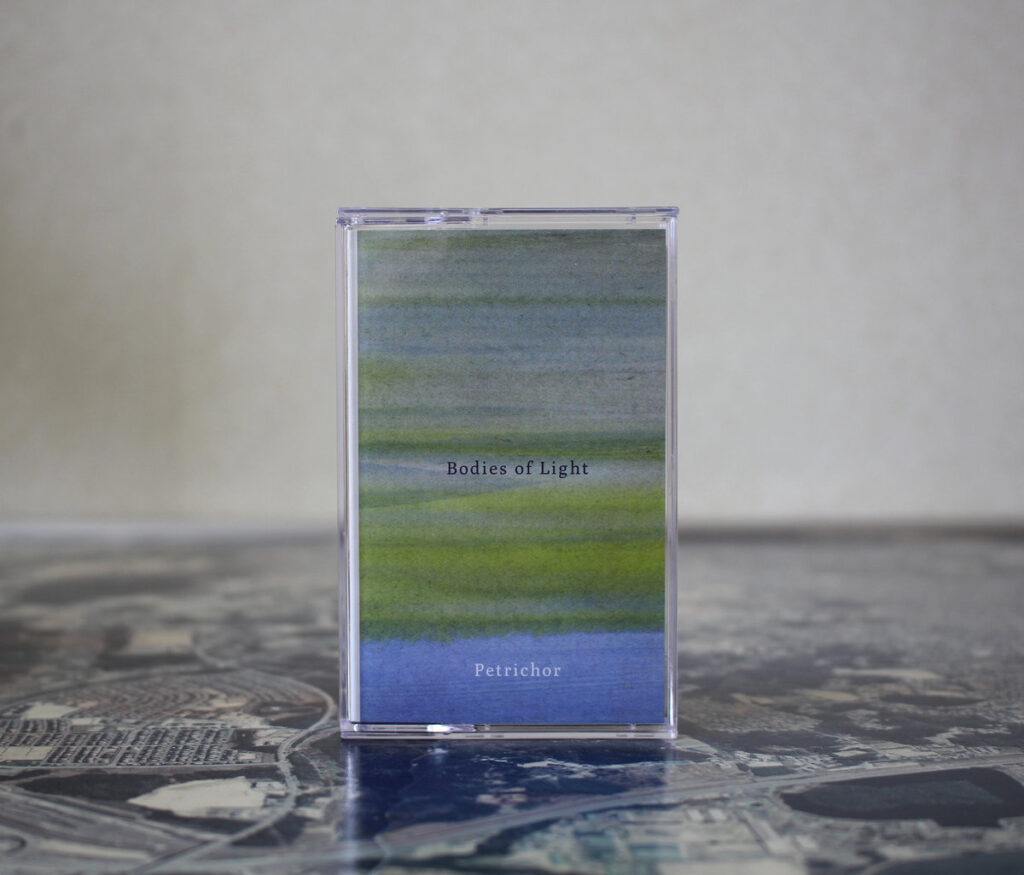
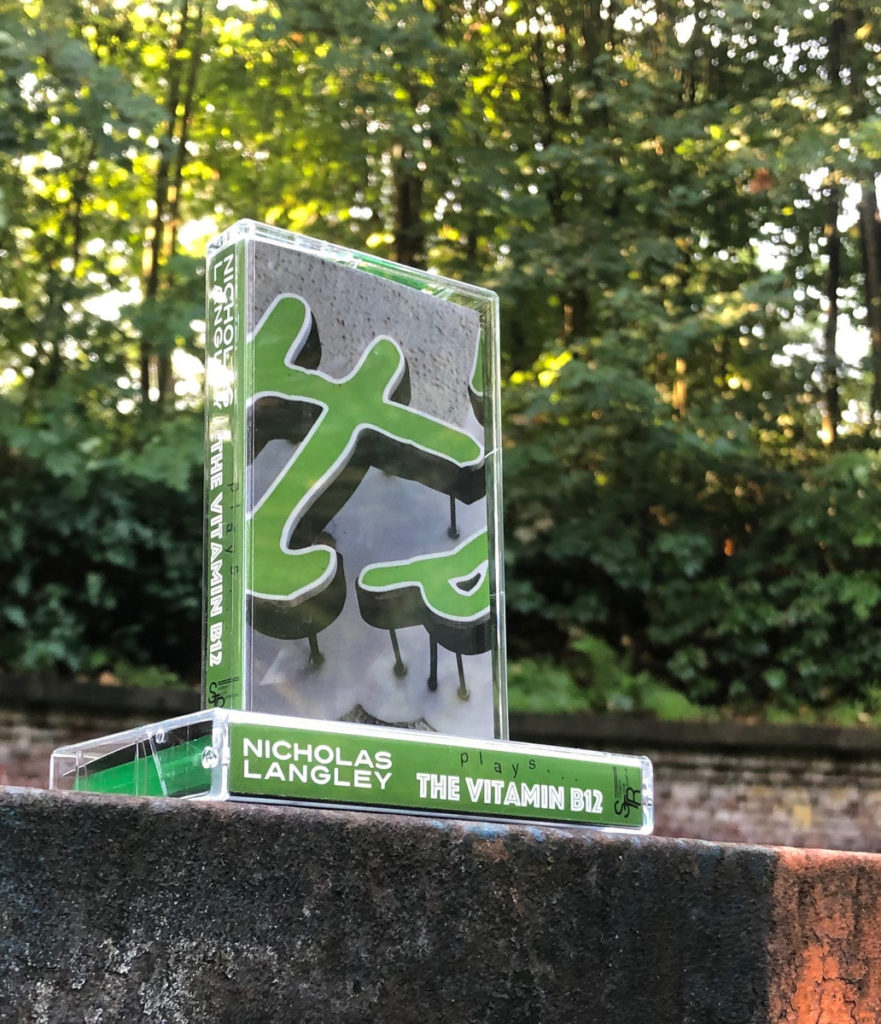
Bodies of Light is like an all-star team, except instead of baseball, it’s an all-star team of experimental electronic drone music. Sort of the same, but not really. Instead of nine participants, Bodies of Light has only two: Peter Taylor, of MAbH (aka Mortuus Auris and the Black Hand) and yama-no-kami fame, and Nicholas Langley, showrunner of Third Kind Records (and Tabs Out celebrity) and solo musician/participant in such groups as Erm and Nickname and Vitamin B12, among others. But they don’t need an additional seven people to make the wonderful magic that they do, to prove to their hysterical fans that the wait was totally worth it.

And they’ve already sort of worked together – Nicholas has released Peter’s music after all. But in a fully collaborative environment, even though it’s virtual (London and Brighton are separated by a 60-minute train ride, but these are the days of COVID), the two shine brightly. “Petrichor” is chock full of the deeply personal environments that Peter and Nicholas are so good at creating on their own, and the synthesizer sweep of the tunes, peppered with spoken samples and other accoutrements, like the delectable piano loops of “Screen Memory,” serve to block out any external interruption. This is the stuff to get lost in, to listen to on headphones and absolutely escape. Taylor and Langley are at the top of the game with this stuff – they have few equals.

And of course, any really good team has to have a really good coach, and Peter and Nicholas have found one in Muzan Editions. Well, by coach I mean label to release the music, but you get the idea. If it’s Muzan, it’s quality! That’s no joke.

Related Links